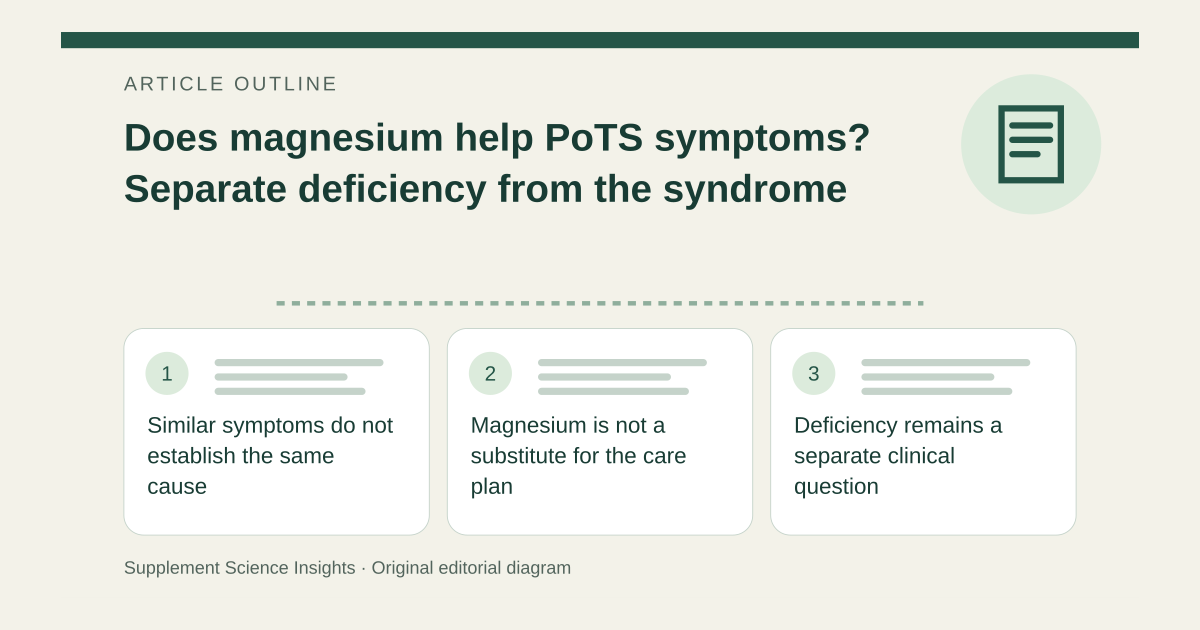
Similar symptoms do not establish the same cause
PoTS involves an excessive heart-rate increase on becoming upright and can cause dizziness, fatigue and palpitations. NHS guidance notes that similar symptoms can occur with other conditions. Neither the symptom pattern nor a supplement response is enough to diagnose PoTS or magnesium deficiency. [1][2]
Magnesium is not a substitute for the care plan
The inspected NHS guidance describes individualized fluid intake, compression clothing, activity adjustments and sometimes medicines. It does not establish a magnesium treatment protocol. A product labeled electrolyte support should not be assumed equivalent to a prescribed fluid or medication strategy. [1]
Deficiency remains a separate clinical question
A person with PoTS can also have low intake or another cause of magnesium loss, just as someone without PoTS can. Assessment should consider the complete history and relevant testing. Treating a confirmed shortfall does not demonstrate that magnesium treats the syndrome itself. [2]
Adverse effects can complicate symptoms
Magnesium supplements can cause diarrhea, and excessive exposure can affect blood pressure and other physiological functions. Kidney function and concurrent medicines matter. Escalating a dose in response to ongoing dizziness can therefore create additional problems rather than clarify the cause. [2]
Review changes one at a time with the team
Imagine someone starts compression clothing, changes fluids and adds magnesium in the same week. Improved standing tolerance cannot identify which change helped. Keep a symptom and product record and discuss it with the clinician managing PoTS. [1][2]
| Situation | Useful distinction |
|---|---|
| Dizziness or palpitations | Not a magnesium-deficiency diagnosis |
| Electrolyte marketing | Not a validated PoTS protocol |
| Confirmed deficiency | Can coexist with PoTS |
| Several treatment changes | Limits causal attribution |
Sources for this article
- Postural tachycardia syndrome (PoTS) - NHS
Source consulted: 2026-09-21. This is a reference resource, not a claim that we conducted the studies or tested a product. - Magnesium - Health Professional Fact Sheet
Source consulted: 2026-09-21. This is a reference resource, not a claim that we conducted the studies or tested a product.