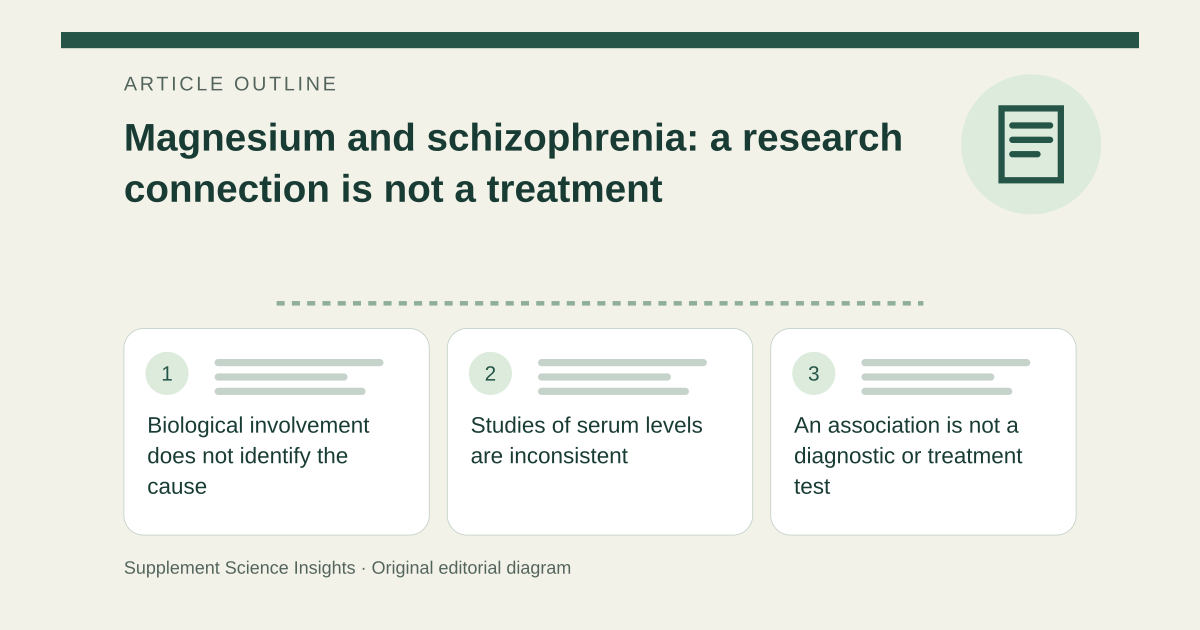
Biological involvement does not identify the cause
Magnesium contributes to normal nerve function, which provides a reason to study it in brain disorders. That general role does not show that low magnesium causes schizophrenia or that an additional supplement treats its symptoms. A plausible mechanism requires clinical evidence. [1][2]
Studies of serum levels are inconsistent
A 2020 systematic review found no consistent magnesium pattern in schizophrenia. It described differences in measurements, populations and medication exposure. Blood values also do not directly represent every intracellular or brain compartment. The authors reported no external funding or conflicts of interest. [2]
An association is not a diagnostic or treatment test
The review did not establish the investigated elements as useful stand-alone diagnostic or treatment tools. Changes during antipsychotic treatment do not prove that supplementation will reproduce a medicine effect. Suspected nutritional deficiency still deserves its own assessment. [2][1]
Keep effective care in place
NIMH describes antipsychotic medicines and psychosocial treatments as parts of schizophrenia care. Do not stop prescribed treatment independently because of a mineral claim. Discuss dietary problems, supplements and possible adverse effects with the treating team. [3]
Treat a shortfall without relabeling the illness
Imagine someone with schizophrenia also has poor intake and prolonged diarrhea. Assessing magnesium may be appropriate, but correcting a deficiency does not establish that the psychiatric illness was caused by it. Both nutritional and psychiatric needs can be addressed together. [1][3]
| Finding | What it does not prove |
|---|---|
| Low blood magnesium | Cause of schizophrenia |
| Different levels during treatment | A supplement reproduces treatment |
| Normal nerve-signaling role | Clinical efficacy for psychosis |
| Confirmed nutritional shortfall | Reason to abandon psychiatric care |
Sources for this article
- Magnesium - Health Professional Fact Sheet
Source consulted: 2026-09-21. This is a reference resource, not a claim that we conducted the studies or tested a product. - Beyond the Mind—Serum Trace Element Levels in Schizophrenic Patients: A Systematic Review - PMC
Source consulted: 2026-09-21. This is a reference resource, not a claim that we conducted the studies or tested a product. - Schizophrenia - National Institute of Mental Health (NIMH)
Source consulted: 2026-09-21. This is a reference resource, not a claim that we conducted the studies or tested a product.