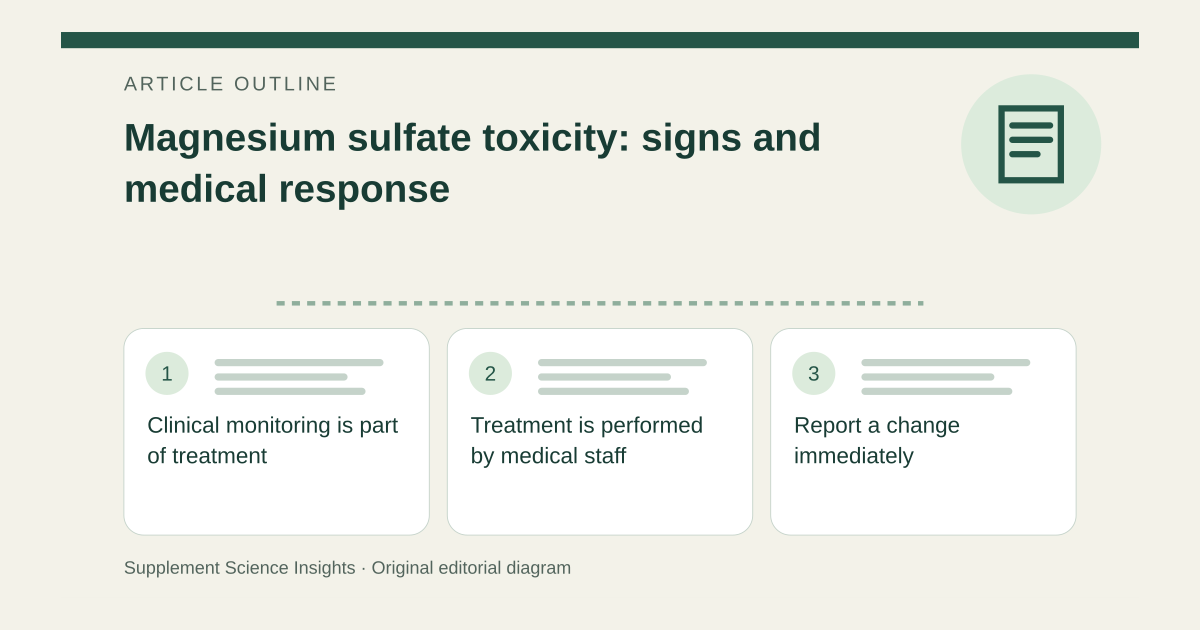
Clinical monitoring is part of treatment
The prescribing information describes weakness, reduced reflexes and respiratory depression among toxicity concerns. Kidney impairment raises the risk because magnesium clearance is reduced. Clinicians monitor symptoms, blood levels and kidney-related measures during an infusion. [1]
Treatment is performed by medical staff
The label directs stopping magnesium administration when toxicity occurs and describes respiratory support and injectable calcium when needed. These are clinical interventions, not directions for someone to prepare an antidote or adjust an infusion without the treatment team. [1]
Report a change immediately
Imagine a person receiving magnesium becomes markedly weak or has difficulty breathing. Alert the clinical team immediately; outside a medical setting, seek emergency care for severe symptoms. Do not wait for an online threshold or try an oral supplement to counteract the exposure. [1][2]
| Situation | Response |
|---|---|
| New breathing difficulty | Immediate medical response |
| Kidney impairment | Greater accumulation risk |
| Antidote question | Requires supervised treatment |
Sources for this article
- DailyMed - MAGNESIUM SULFATE IN DEXTROSE- magnesium sulfate injection
Source consulted: 2026-09-20. This is a reference resource, not a claim that we conducted the studies or tested a product. - Magnesium - Health Professional Fact Sheet
Source consulted: 2026-09-20. This is a reference resource, not a claim that we conducted the studies or tested a product.