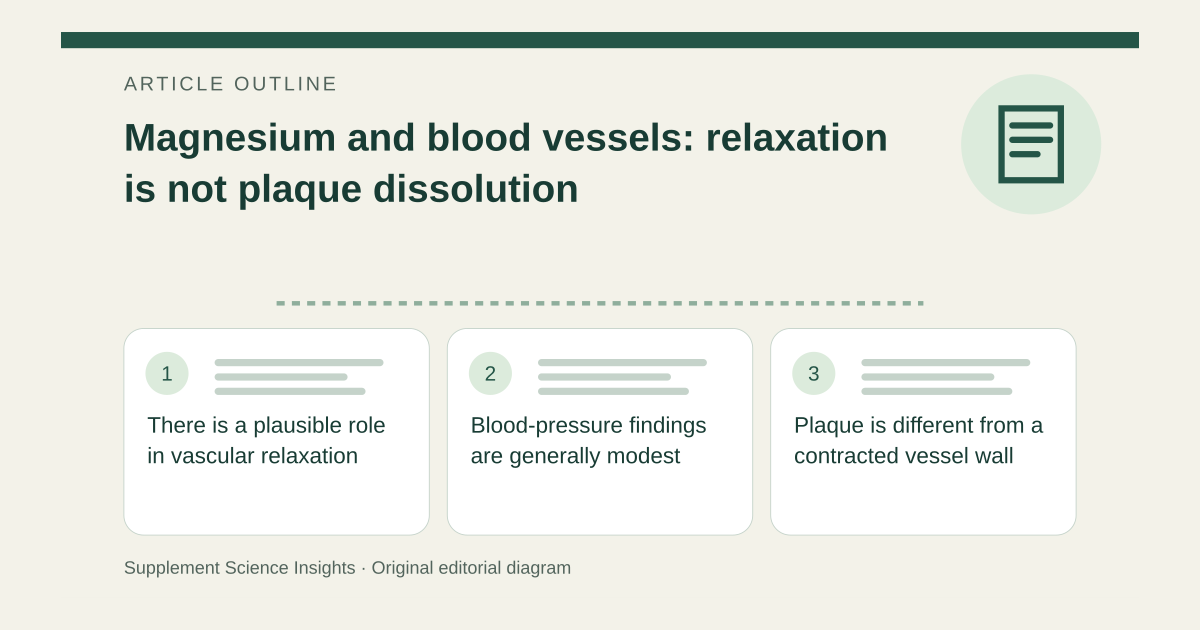
There is a plausible role in vascular relaxation
A 2024 review describes magnesium effects on calcium-channel activity, nitric oxide and prostacyclin pathways involved in vascular tone. It draws on experimental and clinical evidence. This supports a physiological role, not a guarantee that any retail dose produces a useful or immediate vascular response. [1]
Blood-pressure findings are generally modest
NIH summarizes small average blood-pressure effects, and the 2026 cardiometabolic review also reports modest pooled reductions. A measurable average effect does not replace treatment selected for hypertension or establish that a blocked vessel has cleared. [2][3]
Plaque is different from a contracted vessel wall
Atherosclerotic plaque contains cholesterol, fats, calcium and other substances. Relaxing vascular muscle is not the same process as removing that material. The inspected sources do not establish magnesium supplementation as a plaque-dissolving treatment. [4][1]
Plaque management has its own evidence and time course
NHLBI describes risk-factor control, lifestyle changes, cholesterol medicines and procedures when indicated. Some atherosclerosis can regress with appropriate treatment, while severe disease may not be fully reversible. This should not be converted into a claim that magnesium rapidly cleans arteries. [4]
Keep mechanism and treatment claims separate
The mechanistic review disclosed an American Society of Nephrology salary-support grant and no commercial or financial conflicts. Imagine a product advertises vascular relaxation as proof of plaque removal: the proposed mechanism does not demonstrate that outcome. Continue prescribed cardiovascular care and review supplement safety, especially with kidney impairment or blood-pressure medicines. [1][2][4]
| Claim | Distinct evidence needed |
|---|---|
| Vascular relaxation | Physiological effect |
| Lower blood pressure | Measured clinical endpoint |
| Less arterial plaque | Structural disease outcome |
| Fewer cardiovascular events | Longer-term clinical outcomes |
Sources for this article
- Magnesium in hypertension: mechanisms and clinical implications - PMC
Source consulted: 2026-09-21. This is a reference resource, not a claim that we conducted the studies or tested a product. - Magnesium - Health Professional Fact Sheet
Source consulted: 2026-09-21. This is a reference resource, not a claim that we conducted the studies or tested a product. - Comprehensive Effects of Magnesium Supplementation on Cardiometabolic Risk Factors: A Systematic Review and Dose–Response Meta-Analysis - PMC
Source consulted: 2026-09-21. This is a reference resource, not a claim that we conducted the studies or tested a product. - Atherosclerosis - Treatment | NHLBI, NIH
Source consulted: 2026-09-21. This is a reference resource, not a claim that we conducted the studies or tested a product.