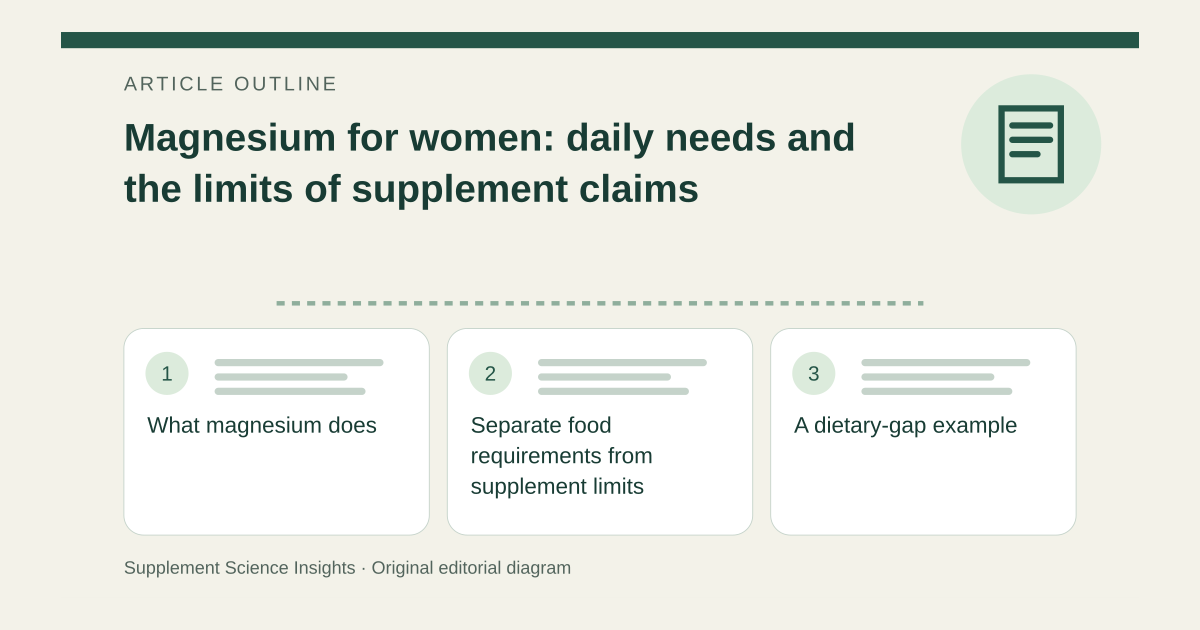
What magnesium does
Magnesium participates in energy metabolism, protein synthesis, muscle and nerve function, and normal heart rhythm. These functions explain why adequate intake matters. They do not establish that every woman benefits from a supplement or that magnesium alone treats a hormonal, sleep or mood disorder. [1]
Separate food requirements from supplement limits
For women aged 19–30, the recommended intake is 310 mg daily; from 31 onward it is 320 mg. During pregnancy the corresponding figures are 350 and 360 mg. Lactation uses the nonpregnant adult figures. The general adult upper limit of 350 mg concerns supplements and medicines, excluding naturally occurring food magnesium. [1]
A dietary-gap example
Imagine a 35-year-old nonpregnant woman estimates 250 mg from food. The arithmetic difference from the 320 mg reference is 70 mg, not an automatic instruction to buy a 320 mg capsule. Food changes may help close it. Kidney disease, medicines and gastrointestinal tolerance affect whether and how a supplement should be used. [1]
| Hypothetical comparison | Meaning |
|---|---|
| Age35, nonpregnant reference | 320 mg total daily |
| 250 mg estimated from food | 70 mg below that reference |
| 350 mg nonfood upper limit | Different denominator from the food requirement |
Sources for this article
- Magnesium - Health Professional Fact Sheet
Source consulted: 2026-09-20. This is a reference resource, not a claim that we conducted the studies or tested a product.