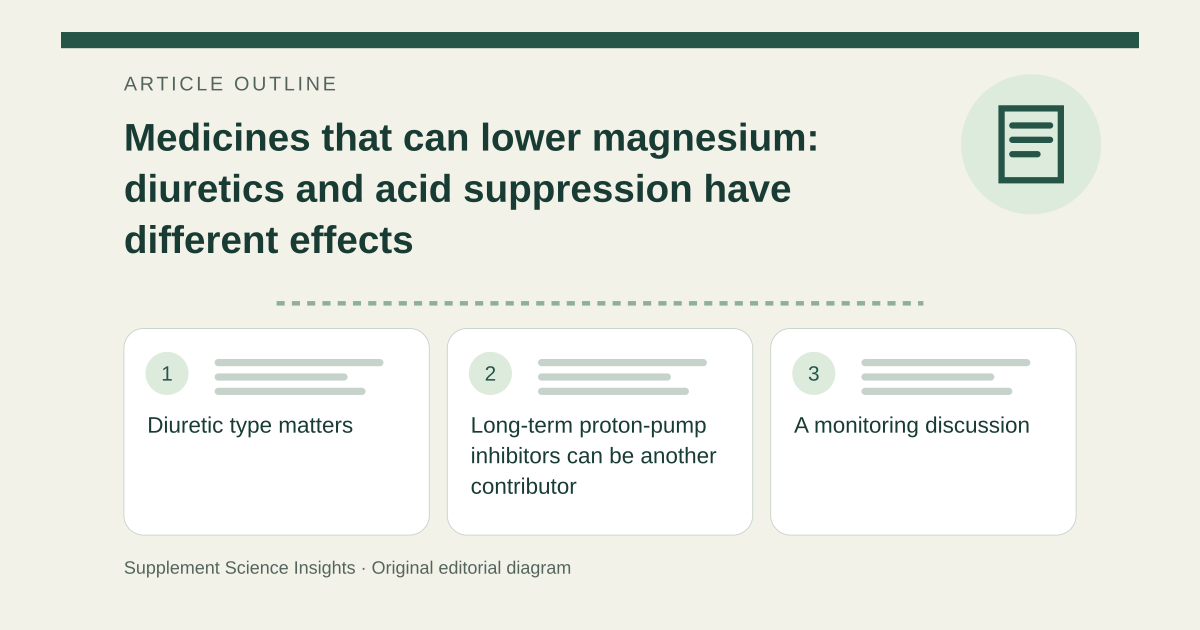
Diuretic type matters
Loop diuretics such as furosemide and thiazide diuretics can increase magnesium loss in urine. Potassium-sparing agents such as amiloride and spironolactone can reduce magnesium excretion. Therefore the word diuretic alone does not establish whether a medicine lowers magnesium or whether supplementation is needed. [1]
Long-term proton-pump inhibitors can be another contributor
NIH ODS describes hypomagnesemia with prolonged PPI use, typically beyond a year. In some reported cases magnesium replacement alone did not correct the problem. That finding calls for a prescriber-led medication and monitoring review, not an instruction to stop a PPI independently or a guarantee that every long-term user becomes deficient. [1]
A monitoring discussion
Imagine someone taking a PPI and a loop diuretic has symptoms or a low magnesium result. Bring the complete medication list, doses, duration and other relevant laboratory results. The clinician can assess whether monitoring or treatment changes are warranted. Adding an over-the-counter product without considering kidney function and the underlying cause may be inadequate. [1]
| Hypothetical medicine | Direction described in ODS |
|---|---|
| Loop/thiazide diuretic | May increase urinary magnesium loss |
| Potassium-sparing diuretic | Can reduce excretion |
| Long-term PPI | May lower magnesium status |
Sources for this article
- Magnesium - Health Professional Fact Sheet
Source consulted: 2026-09-20. This is a reference resource, not a claim that we conducted the studies or tested a product.