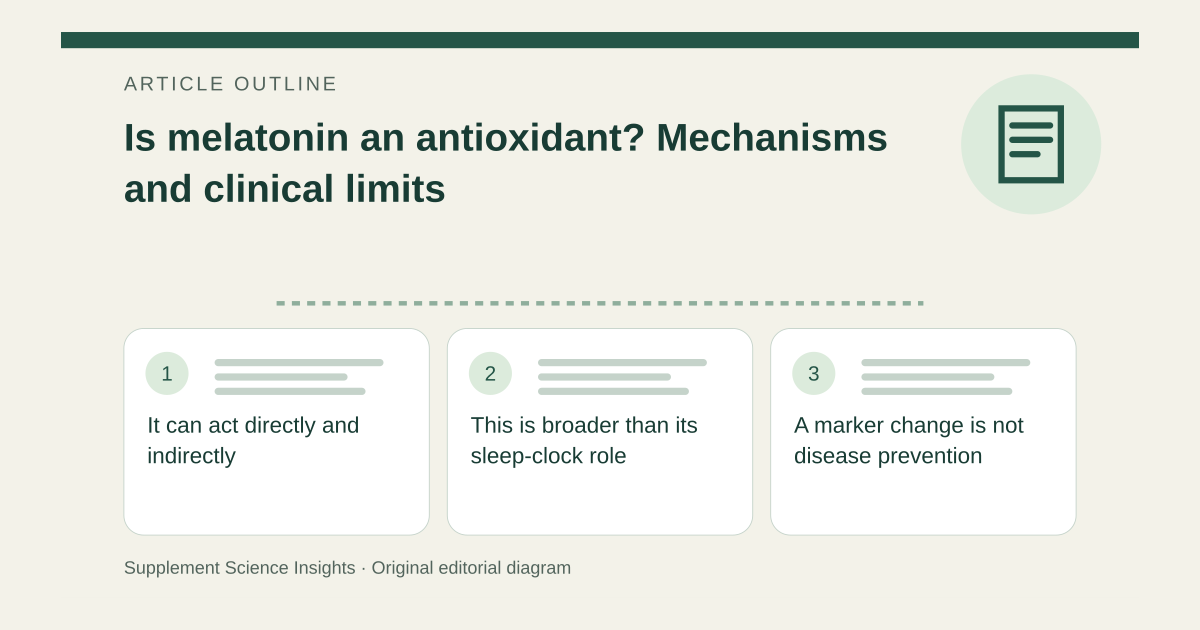
It can act directly and indirectly
Reviews describe direct scavenging of reactive oxygen and nitrogen species and regulation of antioxidant defenses. Studied pathways include enzymes such as superoxide dismutase, catalase and glutathione peroxidase. The mechanisms depend on experimental conditions and exposure. [1]
This is broader than its sleep-clock role
Endotext distinguishes receptor-mediated circadian actions from other effects, including antioxidant properties. A substance can participate in both processes, but evidence for one does not automatically validate a clinical claim about the other. [2]
A marker change is not disease prevention
Laboratory protection of cells or changes in oxidative-stress markers cannot by themselves establish prevention of neurodegeneration, cancer or aging. The reviewed neurodegeneration literature identifies limited clinical samples and a need for stronger trials. Do not treat a mechanism as a universal supplement indication. [1]
Do not select a dose by antioxidant slogans
Imagine someone doubles a sleep dose to obtain more free-radical protection. The reviewed guidance provides no validated general antioxidant regimen for that purpose. Higher exposure can add unwanted effects, while the promised preventive benefit remains unproven. [3][1]
| Evidence | Clinical limit |
|---|---|
| Chemical scavenging | Not a treatment outcome |
| Enzyme regulation | Context-dependent mechanism |
| Experimental neuroprotection | Needs human confirmation |
| Supplement dose | Cannot be inferred from a slogan |
Sources for this article
- Melatonin—A Powerful Antioxidant in Neurodegenerative Diseases - PMC
Source consulted: 2026-09-21. This is a reference resource, not a claim that we conducted the studies or tested a product. - Physiology of the Pineal Gland and Melatonin - Endotext - NCBI Bookshelf
Source consulted: 2026-09-21. This is a reference resource, not a claim that we conducted the studies or tested a product. - Melatonin: What You Need To Know | NCCIH
Source consulted: 2026-09-21. This is a reference resource, not a claim that we conducted the studies or tested a product.