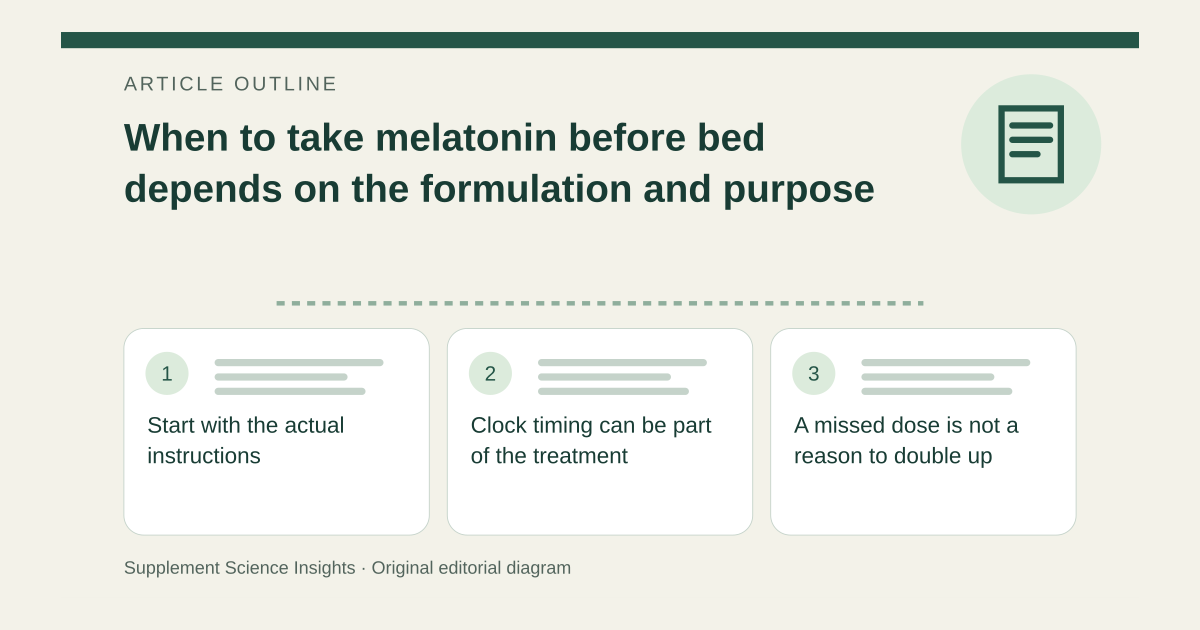
Start with the actual instructions
NHS describes a UK slow-release adult insomnia regimen taken one to two hours before bedtime. Other prescribed uses have different timing. This is an example of product-specific guidance, not a universal schedule for every gummy, liquid or supplement. Follow the directions for your preparation and reason for treatment. [1]
Clock timing can be part of the treatment
NCCIH distinguishes jet lag and delayed sleep-wake phase disorder from chronic insomnia. For a circadian timing problem, the intended sleep schedule matters; simply taking more whenever you feel awake does not reproduce a carefully timed plan. Discuss the purpose and target bedtime with the clinician. [2]
A missed dose is not a reason to double up
NHS advises skipping a missed bedtime dose rather than taking an extra dose to compensate. Avoid treating continued wakefulness as proof that another serving is needed. Drowsiness and next-day impairment can still occur. [1][3]
Record timing together with daytime function
Imagine a person changes both bedtime and formulation, then feels sleepy the next morning. Record the exact product, dose time, sleep schedule and symptoms for review. A clock time alone cannot identify whether the regimen is appropriate. [2][3]
| Question | Needed context |
|---|---|
| How early before bed? | Formulation and indication |
| Still awake after a dose? | Do not assume a repeat is needed |
| Groggy the next day? | Review timing, dose and function |
Sources for this article
- How and when to take melatonin - NHS
Source consulted: 2026-09-21. This is a reference resource, not a claim that we conducted the studies or tested a product. - Melatonin: What You Need To Know | NCCIH
Source consulted: 2026-09-21. This is a reference resource, not a claim that we conducted the studies or tested a product. - Side effects of melatonin - NHS
Source consulted: 2026-09-21. This is a reference resource, not a claim that we conducted the studies or tested a product.