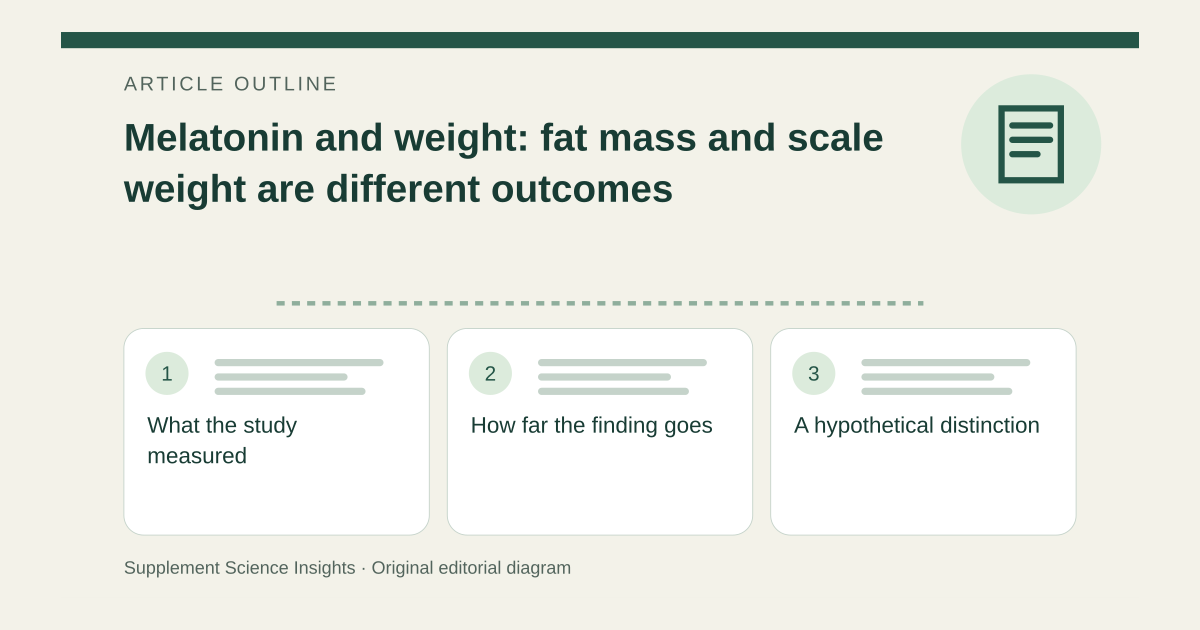
What the study measured
Eighty-one postmenopausal women were randomized to melatonin or placebo for a year. Body composition was measured with DXA, alongside weight and metabolic measures. [1]
The melatonin group had lower fat mass relative to placebo. The lean-mass finding depended on statistical adjustment, while changes in body weight and BMI did not significantly differ between groups. [1]
How far the finding goes
Different outcomes can lead to different conclusions without a contradiction. Fat mass, lean mass and total weight measure different things. This population-specific trial does not establish predictable weight gain or loss in all users. Funding and conflicts were not established from the abstract. [1]
The study also cannot identify the reason for an individual weight change during supplement use. A claim about scale weight should be supported by the scale-weight comparison, rather than substituted with a favorable result from another endpoint. [1]
A hypothetical distinction
Imagine two people have the same total weight but different proportions of fat and lean tissue. A composition measurement can distinguish them even though a scale cannot.
| Detail | Interpretation |
|---|---|
| 81 women | Specific population |
| Fat mass | Difference favored melatonin |
| Weight and BMI | No significant group difference |
Sources for this article
- Reduced fat mass and increased lean mass in response to 1 year of melatonin treatment in postmenopausal women: A randomized placebo-controlled trial - PubMed
Source consulted: 2026-09-19. This is a reference resource, not a claim that we conducted the studies or tested a product.