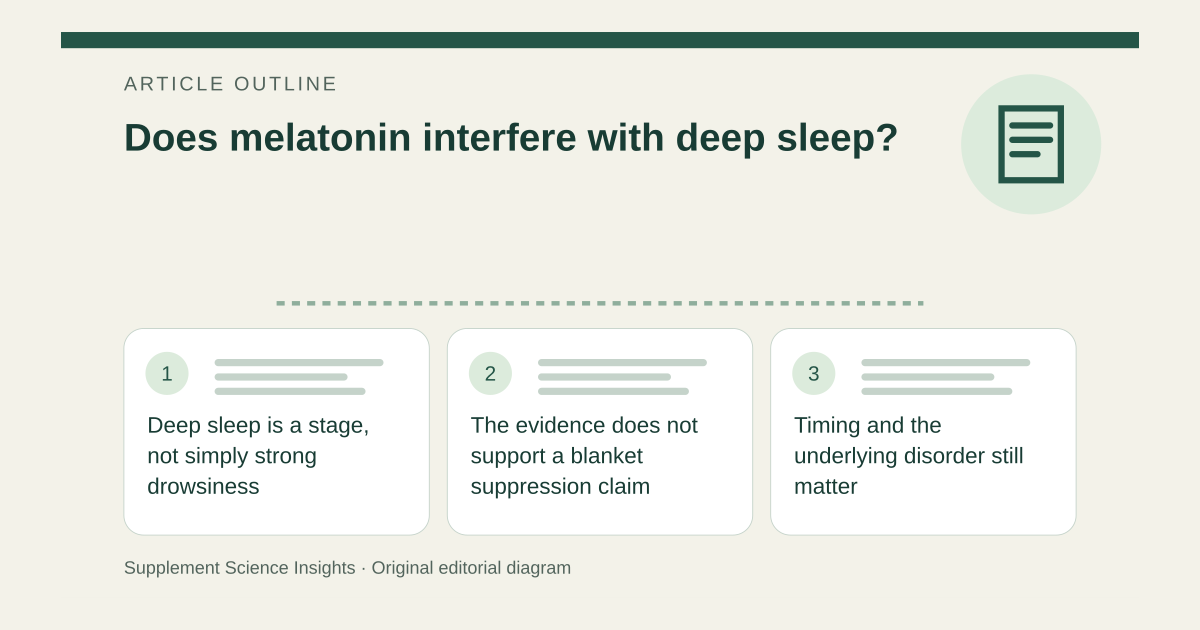
Deep sleep is a stage, not simply strong drowsiness
Slow-wave or N3 sleep is identified through sleep-recording characteristics. Melatonin’s best-known role concerns circadian signaling and sleep timing. Feeling very sleepy after a dose does not demonstrate more N3 sleep or improved restorative function. [1][2]
The evidence does not support a blanket suppression claim
A 2018 review describes preservation of sleep architecture and no suppression of slow-wave sleep in the evidence it discusses. Its author was founder and chief scientific officer of the company producing prolonged-release Circadin, a relevant conflict. The discussion should not be generalized into a guarantee for every dose or product. [1]
Timing and the underlying disorder still matter
A change in sleep after starting melatonin could reflect the regimen, other medicines or the original sleep problem. NCCIH distinguishes circadian uses from chronic insomnia and notes safety uncertainties. More melatonin is not a validated way to increase deep-sleep minutes. [3]
Use persistent symptoms to guide review
Imagine a wearable reports less deep sleep while the person feels unchanged. That alone does not establish a medication effect. If sleep quality, daytime alertness or unusual nighttime behavior worsens, discuss the pattern and whether formal evaluation is needed instead of changing doses to chase a tracker score. [1][3]
| Measure | What it describes |
|---|---|
| Sleep latency | Time to fall asleep |
| Drowsiness | Subjective impairment or sleepiness |
| N3 sleep | A recorded sleep stage |
| Daytime function | A practical clinical outcome |
Sources for this article
- New perspectives on the role of melatonin in human sleep, circadian rhythms and their regulation - PMC
Source consulted: 2026-09-21. This is a reference resource, not a claim that we conducted the studies or tested a product. - Physiology of the Pineal Gland and Melatonin - Endotext - NCBI Bookshelf
Source consulted: 2026-09-21. This is a reference resource, not a claim that we conducted the studies or tested a product. - Melatonin: What You Need To Know | NCCIH
Source consulted: 2026-09-21. This is a reference resource, not a claim that we conducted the studies or tested a product.