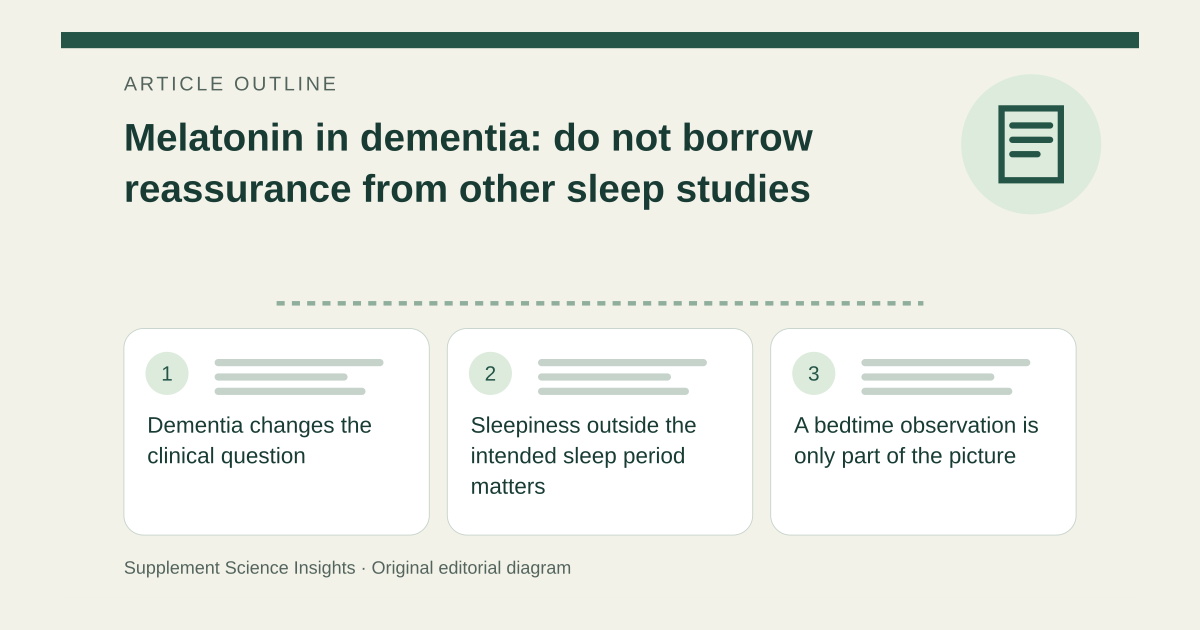
Dementia changes the clinical question
NCCIH reports that 2015 American Academy of Sleep Medicine guidance recommends against melatonin use by people with dementia. This is the dated guideline statement summarized by the agency, not a new independent guideline review. [1]
A study of jet lag in otherwise healthy travelers cannot override that population-specific concern. Nor does a product’s availability establish that it is appropriate for a person with dementia. [1]
Sleepiness outside the intended sleep period matters
The source notes that melatonin may remain active longer in older people and cause daytime drowsiness. The intended bedtime effect therefore is not the only outcome to consider. [1]
A review of sleep difficulties should include daytime function, medicines and the actual pattern observed. This page does not infer the cause of new confusion or daytime sleepiness from a supplement history alone. [1]
A bedtime observation is only part of the picture
Imagine a caregiver notices an earlier bedtime after a new supplement but also more daytime drowsiness. Recording only the bedtime change would omit a relevant effect.
Both observations belong in the clinical discussion. They do not by themselves prove benefit, harm or the best alternative treatment.
| Detail | Meaning |
|---|---|
| Earlier bedtime | One possible effect |
| More daytime drowsiness | Another relevant observation |
| A treatment decision | Needs the person’s clinical context |
Use the treating team’s assessment
Do not initiate or escalate melatonin for a person with dementia based on general claims about natural sleep hormones. Existing treatment and new symptoms should be reviewed with the care team. [1]
This article does not provide a substitute drug, a discontinuation schedule or a current comprehensive treatment guideline. It explains why evidence from other adults should not be generalized automatically. [1]
Sources for this article
- NCCIH: Melatonin—What You Need To Know
Source consulted: 2026-09-17. This is a reference resource, not a claim that we conducted the studies or tested a product.