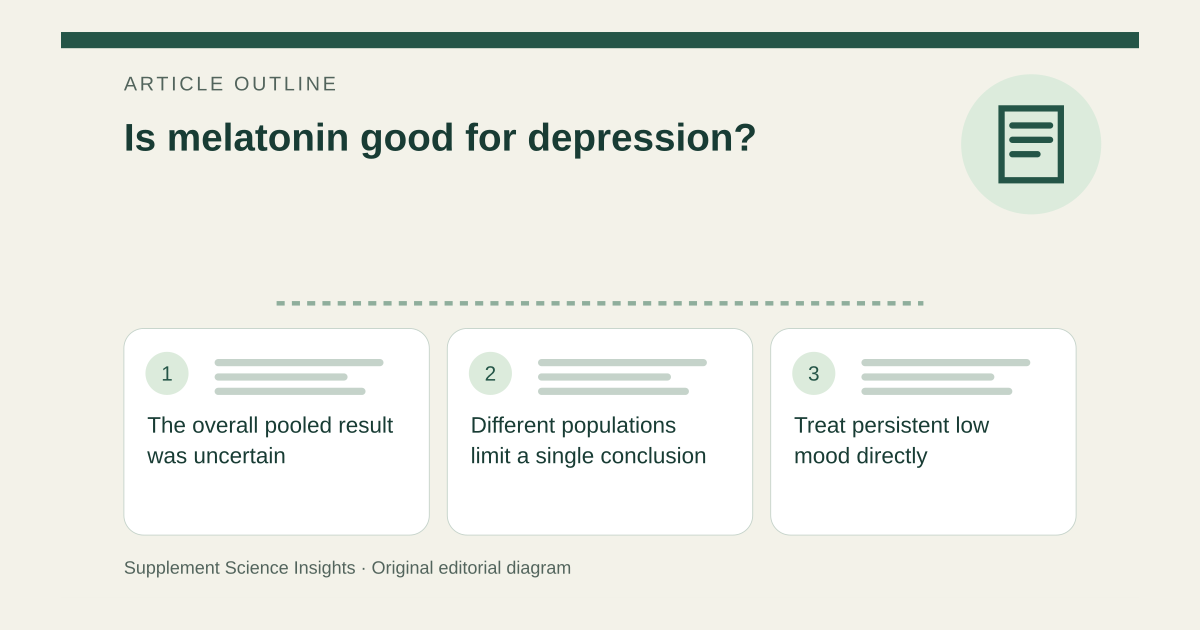
The overall pooled result was uncertain
A 2022 systematic review included 19 studies with 1,178 participants. Its overall analysis did not find a statistically significant improvement in depressive symptoms, although one rating-scale subgroup favored melatonin. This pattern supports uncertainty rather than a universal benefit claim. [1]
Different populations limit a single conclusion
The review combined differing symptom scales, underlying conditions, doses and treatment durations. It could not identify which specific type of depression might benefit. A positive result on one scale cannot establish an effective self-treatment regimen for major depression. [1]
Treat persistent low mood directly
NHS depression care includes assessment and options such as guided self-help, talking therapies and medicines according to severity and need. NHS melatonin guidance also advises contacting a clinician if low or sad feelings develop during use. Do not stop prescribed antidepressants or substitute a sleep supplement without review. [2][3]
Keep separate goals in the care plan
Imagine someone falls asleep earlier but still has persistent low mood and loss of interest. That is not evidence that the depression is adequately treated. Discuss both sleep and mood outcomes so the treatment plan addresses the condition, not only bedtime. [2][1]
| Outcome | Interpretation |
|---|---|
| Earlier sleep onset | A sleep outcome |
| Lower symptom score | Requires reliable comparison |
| Positive subgroup | Not universal efficacy |
| Persistent low mood | Needs depression assessment |
Sources for this article
- The Therapeutic Effect of Exogenous Melatonin on Depressive Symptoms: A Systematic Review and Meta-Analysis - PMC
Source consulted: 2026-09-21. This is a reference resource, not a claim that we conducted the studies or tested a product. - Treatment - Depression in adults - NHS
Source consulted: 2026-09-21. This is a reference resource, not a claim that we conducted the studies or tested a product. - Side effects of melatonin - NHS
Source consulted: 2026-09-21. This is a reference resource, not a claim that we conducted the studies or tested a product.