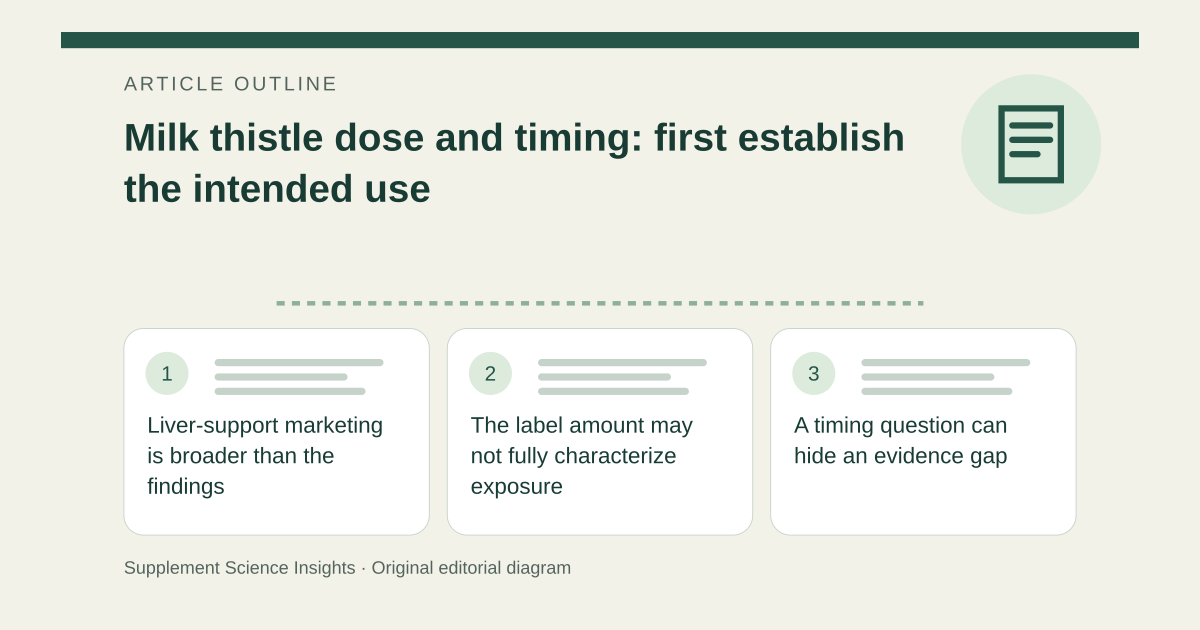
Liver-support marketing is broader than the findings
NCCIH describes milk thistle trial results for liver diseases as conflicting or too limited for firm conclusions. It notes that two NCCIH-funded studies of silymarin, in hepatitis C and nonalcoholic steatohepatitis, did not demonstrate benefit. [1]
That summary does not establish that changing the time of day or increasing a retail serving will overcome the uncertain effectiveness. Nor does a studied extract automatically represent tea, seed powder or every commercial capsule. [1]
The label amount may not fully characterize exposure
NCCIH reports concerns about products with different silymarin amounts from those stated on the label and contamination in some products. A milligram number for the whole extract and a number for a constituent also describe different quantities. [1]
Digestive symptoms and allergic reactions are possible. People with liver disease or medication use should review the exact preparation with their clinician; a supplement should not delay investigation or established treatment. [1]
A timing question can hide an evidence gap
Imagine two products each advertise 200 mg but use different extract specifications. The numbers alone do not establish equivalent constituent exposure or benefit. Choosing morning versus evening cannot resolve that mismatch.
| Observation | What it establishes |
|---|---|
| Liver condition | Must be specified |
| Extract mass | Not always constituent mass |
| Time of day | Does not establish efficacy |
Sources for this article
- NCCIH: Milk Thistle
Source consulted: 2026-09-17. This is a reference resource, not a claim that we conducted the studies or tested a product.