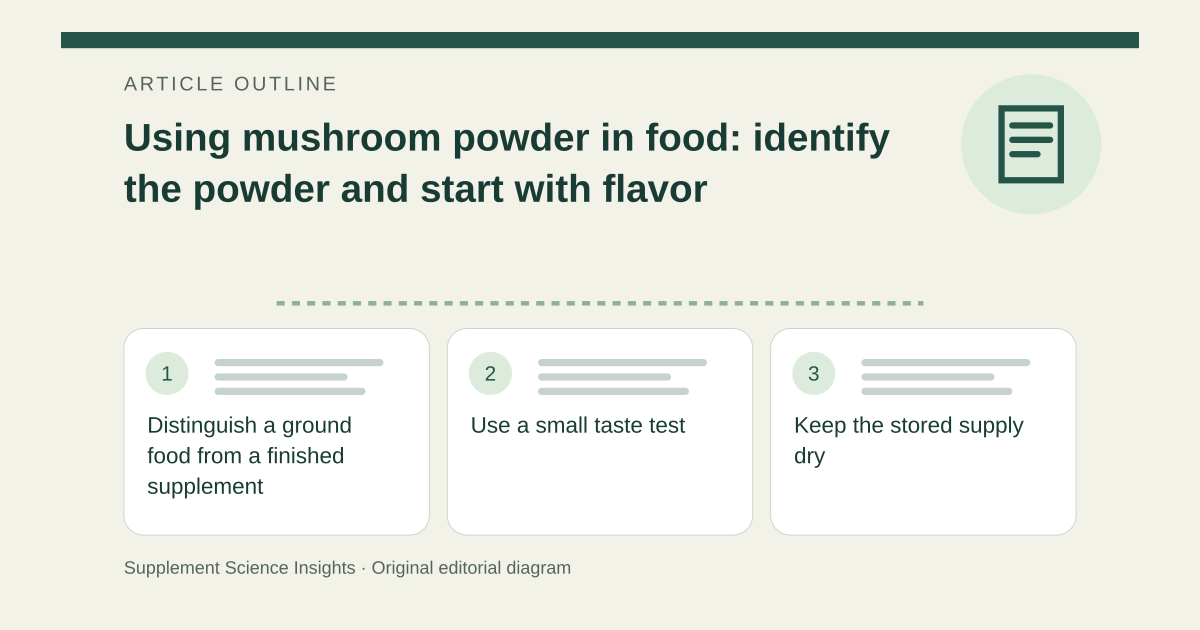
Distinguish a ground food from a finished supplement
A food-grade powder made by grinding properly dried edible mushrooms retains that culinary identity. A supplement may be an extract or a blend with other ingredients and specific directions. Check the source and intended use before stirring it into coffee, soup or sauce. [1][2]
Use a small taste test
For an original kitchen trial, stir a small amount of culinary mushroom powder into a portion of a simmering soup or sauce, then evaluate the flavor and texture. A powder may disperse rather than dissolve completely. It can be easier to assess a savory dish than a whole pot of coffee, where the flavor may be unwelcome. Follow any cooking directions on the product. [3][1]
Keep the stored supply dry
Imagine a damp spoon is repeatedly dipped into a jar of powder. That introduces moisture into a food intended for dry storage. Use a clean dry utensil and reseal the container. A teaspoon is a culinary portion, not evidence of an effective dose for an advertised immune or cognitive benefit. [4][2]
| Example | Interpretation |
|---|---|
| Ground dried edible mushrooms | Culinary ingredient |
| Extract blend | Read its own directions |
| Dry utensil | Protects the stored powder from moisture |
Sources for this article
- Storage & Preservation - Cornell Small Farms
Source consulted: 2026-09-20. This is a reference resource, not a claim that we conducted the studies or tested a product. - Dietary Supplements: What You Need to Know
Source consulted: 2026-09-20. This is a reference resource, not a claim that we conducted the studies or tested a product. - Fruit and Vegetable Guide Series: Mushrooms | USU
Source consulted: 2026-09-20. This is a reference resource, not a claim that we conducted the studies or tested a product. - Food Storage Conditions — Utah State University Extension
Source consulted: 2026-09-20. This is a reference resource, not a claim that we conducted the studies or tested a product.