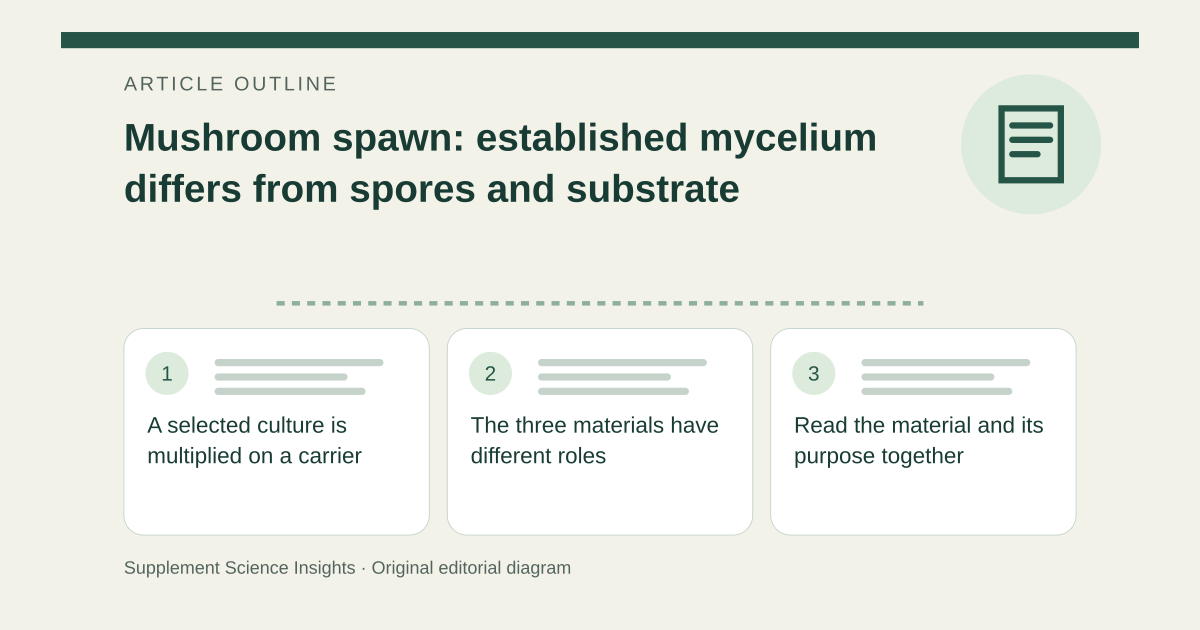
A selected culture is multiplied on a carrier
Penn State describes spawn production using pure-culture mycelium introduced onto prepared grain, then expanded through larger batches. The colonized carrier helps distribute the selected fungus into the production substrate. [1]
The process includes contamination control and attention to changes in culture growth. This is a controlled cultivation procedure, not merely scattering unidentified mushroom material into soil. [1]
The three materials have different roles
Spores are reproductive units; mycelium is established filamentous growth; substrate is the material that supports growth. Spawn is an inoculating preparation containing that growth on a carrier. [1]
The cited guidance concerns cultivated Agaricus. It does not establish a universal recipe for every fungus or certify a commercial supplement’s composition. A powder labeled mycelium still needs an ingredient description; the cultivation term alone does not quantify how much carrier material remains in the finished product. [1]
Read the material and its purpose together
Imagine a bag contains grain colonized by a selected fungus. Calling it spawn describes its role in cultivation, whereas calling it pure fruiting-body powder would describe a different material.
| Detail | Interpretation |
|---|---|
| Spores | Reproductive units |
| Spawn | Inoculating culture preparation |
| Substrate | Growing material |
Sources for this article
- Basic Procedures for Agaricus Mushroom Growing
Source consulted: 2026-09-19. This is a reference resource, not a claim that we conducted the studies or tested a product.