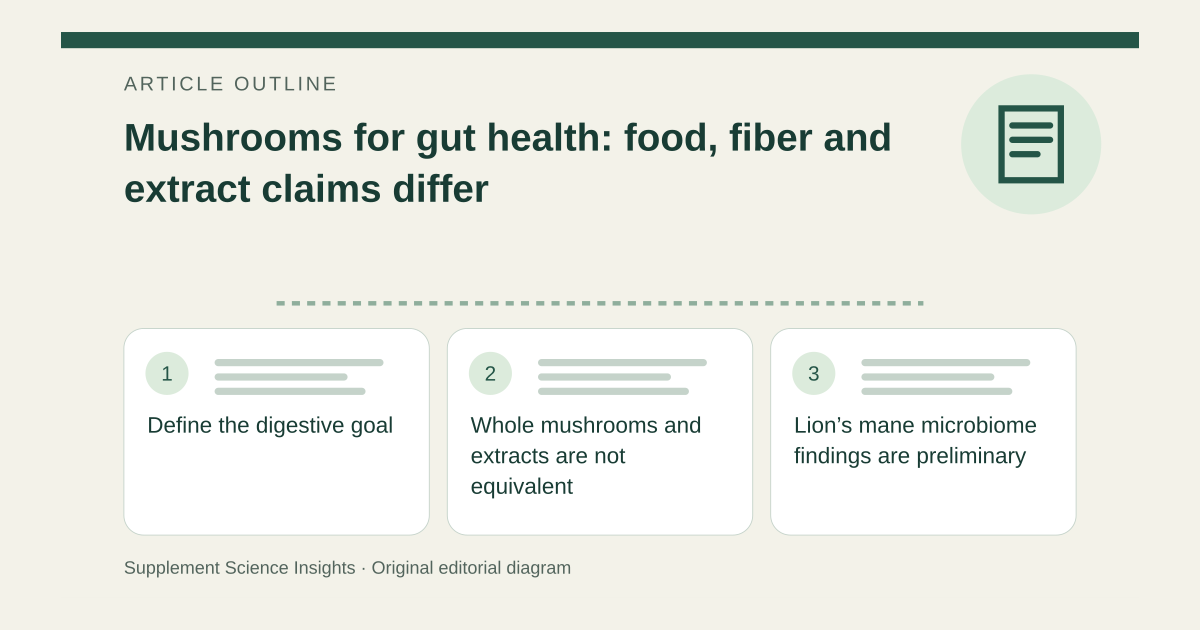
Define the digestive goal
Gut health may mean comfortable bowel habits, adequate dietary fiber or treatment of a diagnosed condition. These goals need different evidence. A supplement promoted for the microbiome has not necessarily been shown to improve pain, constipation, diarrhea or another symptom. [1][2]
Whole mushrooms and extracts are not equivalent
Cleveland Clinic emphasizes that processed mushroom drinks are not nutritionally interchangeable with eating whole mushrooms, including their fiber. OPSS notes uncertainty about whether supplements retain the same components and effects. Choose food by its role in the meal rather than assuming an extract supplies the same nutrition. [3][1]
Lion’s mane microbiome findings are preliminary
MSK mentions limited clinical findings involving gut-microbiome diversity. A change in microbial composition is not automatically a meaningful improvement in digestive symptoms, and the result does not establish a universal best species, dose or retail product. [4]
Reishi and mixed formulas need their own evidence
Reishi’s immune-related research does not demonstrate that it is the best supplement for digestion. A multi-species blend introduces additional uncertainty about amounts and effects. Do not transfer a finding from one preparation to every coffee, powder or capsule carrying the species name. [5][1]
A gut-health product can cause gut symptoms
OPSS describes nausea, vomiting, diarrhea and other gastrointestinal effects with mushroom supplements. Persistent or worsening symptoms are a reason to stop and review the product, not evidence that the microbiome is being repaired. If there is an established digestive condition, discuss the full label with the treating team. [1][2]
Compare outcomes rather than species counts
Imagine a blend advertises more mushroom species than a competing product but provides no evidence of improved bowel symptoms. A larger ingredient list does not resolve the relevant question. Define the symptom or nutrition goal first and compare evidence that actually measures it. [1][2]
| Claim | What to check |
|---|---|
| More microbial diversity | Meaningful symptom outcome |
| Contains several mushrooms | Amounts and preparation |
| Replaces dietary fiber | Actual nutrition |
| Initial digestive upset | Possible adverse effect |
Sources for this article
- Mushroom Dietary Supplements
Source consulted: 2026-09-21. This is a reference resource, not a claim that we conducted the studies or tested a product. - Dietary Supplements: What You Need to Know
Source consulted: 2026-09-21. This is a reference resource, not a claim that we conducted the studies or tested a product. - Mushroom Coffee: What It Is and Benefits
Source consulted: 2026-09-21. This is a reference resource, not a claim that we conducted the studies or tested a product. - Lion's Mane Mushroom | Memorial Sloan Kettering Cancer Center
Source consulted: 2026-09-21. This is a reference resource, not a claim that we conducted the studies or tested a product. - Reishi Mushroom | Memorial Sloan Kettering Cancer Center
Source consulted: 2026-09-21. This is a reference resource, not a claim that we conducted the studies or tested a product.