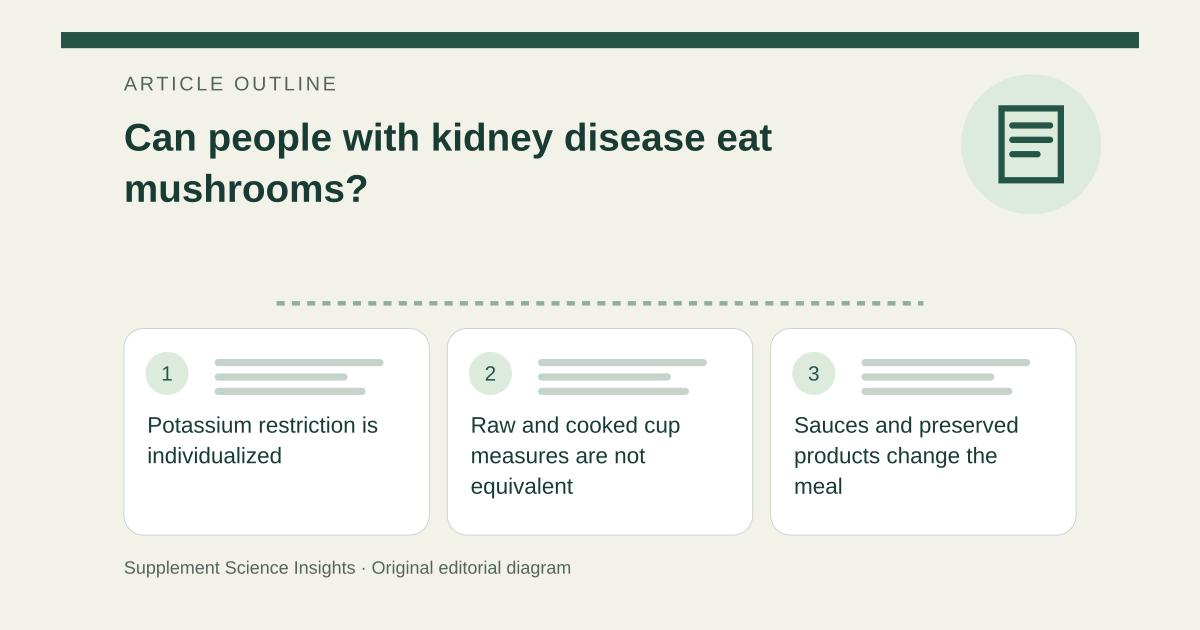
Potassium restriction is individualized
The National Kidney Foundation advises matching potassium intake to blood levels and the care plan. A kidney diagnosis alone does not determine one food allowance. Ask the renal dietitian how a mushroom portion fits the overall meal and current treatment. [1]
Raw and cooked cup measures are not equivalent
NKF lists cooked white mushrooms among higher-potassium choices and raw white mushrooms among lower-potassium choices at the stated serving volumes. Cooking changes volume and water content; this does not mean heat creates potassium. Compare the actual portion and preparation. [1]
Sauces and preserved products change the meal
Salted broths, canned preparations and sauces can add sodium. A plain mushroom portion and a concentrated soup are different exposures. Review the label and serving rather than relying on a general kidney-friendly description. [1][2]
Do not transfer food advice to supplements
Imagine ordinary mushrooms fit the meal plan, so a person adds a concentrated kidney-support mushroom blend. That is a different product with different dose and interaction questions. NKF cautions that herbal supplements may be unsuitable in kidney disease. [3]
| Factor | Check |
|---|---|
| Potassium blood result | Individual target |
| Raw versus cooked cup | Different amount of food |
| Sauce or broth | Added sodium |
| Extract capsule | Separate safety assessment |
Sources for this article
- Potassium in Your CKD Diet | National Kidney Foundation
Source consulted: 2026-09-21. This is a reference resource, not a claim that we conducted the studies or tested a product. - Fruit and Vegetable Guide Series: Mushrooms | USU
Source consulted: 2026-09-21. This is a reference resource, not a claim that we conducted the studies or tested a product. - “Kidney Detox” and Herbal Supplements: What’s Safe and What’s Not | National Kidney Foundation
Source consulted: 2026-09-21. This is a reference resource, not a claim that we conducted the studies or tested a product.