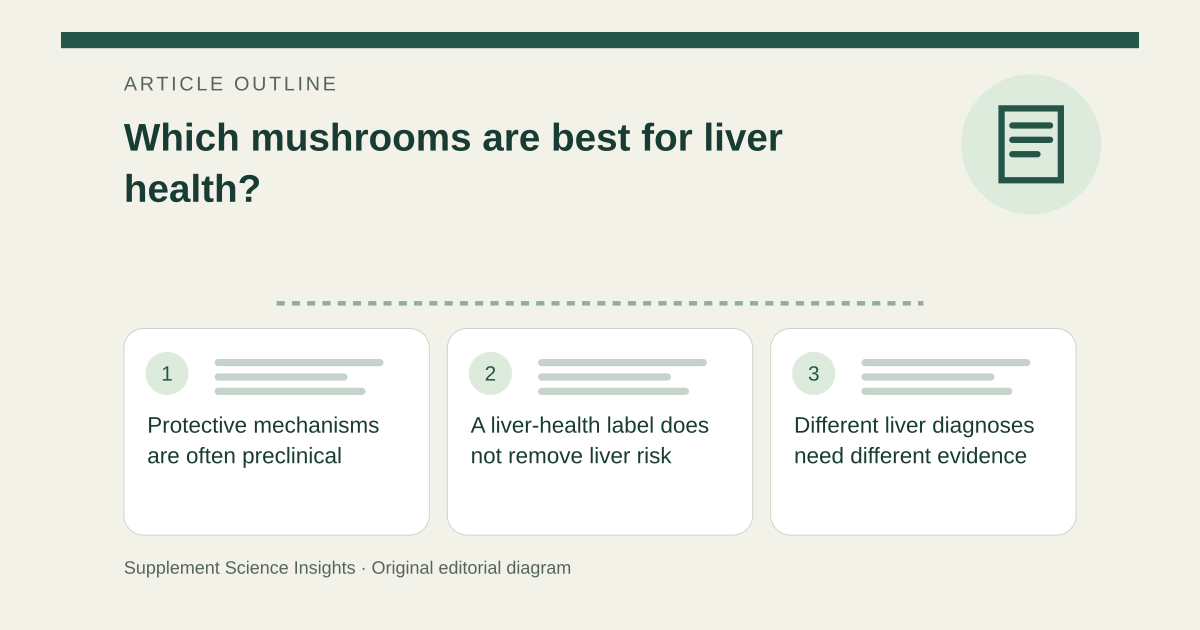
Protective mechanisms are often preclinical
MSK describes liver-related laboratory and animal findings for reishi and chaga. These models can suggest research questions, but they do not establish improved symptoms, fibrosis, liver failure or survival in people taking a retail supplement. [1][2]
A liver-health label does not remove liver risk
MSK reports liver injury associated with some reishi preparations. Such reports cannot quantify the risk for every product, but they are important when a supplement is being promoted to protect the same organ. [1]
Different liver diagnoses need different evidence
Fatty liver disease, viral hepatitis, medication injury and cancer are not one condition. A changed antioxidant marker is not an established treatment for any of them. Review the intended use and full product list with the treating team. [3]
Do not substitute a supplement for an evaluation
Imagine liver enzymes are abnormal and someone adds a mushroom detox blend. The blend may complicate the picture without addressing the cause. Give the clinician the label and use history and follow the recommended diagnostic plan. [1][3]
| Claim | Evidence needed |
|---|---|
| Protects cells in a dish | Human clinical outcome |
| Contains antioxidants | Benefit in the actual liver condition |
| Traditional use | Product-specific safety |
| Detox blend | Clear ingredients and clinical rationale |
Sources for this article
- Reishi Mushroom | Memorial Sloan Kettering Cancer Center
Source consulted: 2026-09-21. This is a reference resource, not a claim that we conducted the studies or tested a product. - Chaga Mushroom | Memorial Sloan Kettering Cancer Center
Source consulted: 2026-09-21. This is a reference resource, not a claim that we conducted the studies or tested a product. - Dietary Supplements: What You Need to Know
Source consulted: 2026-09-21. This is a reference resource, not a claim that we conducted the studies or tested a product.