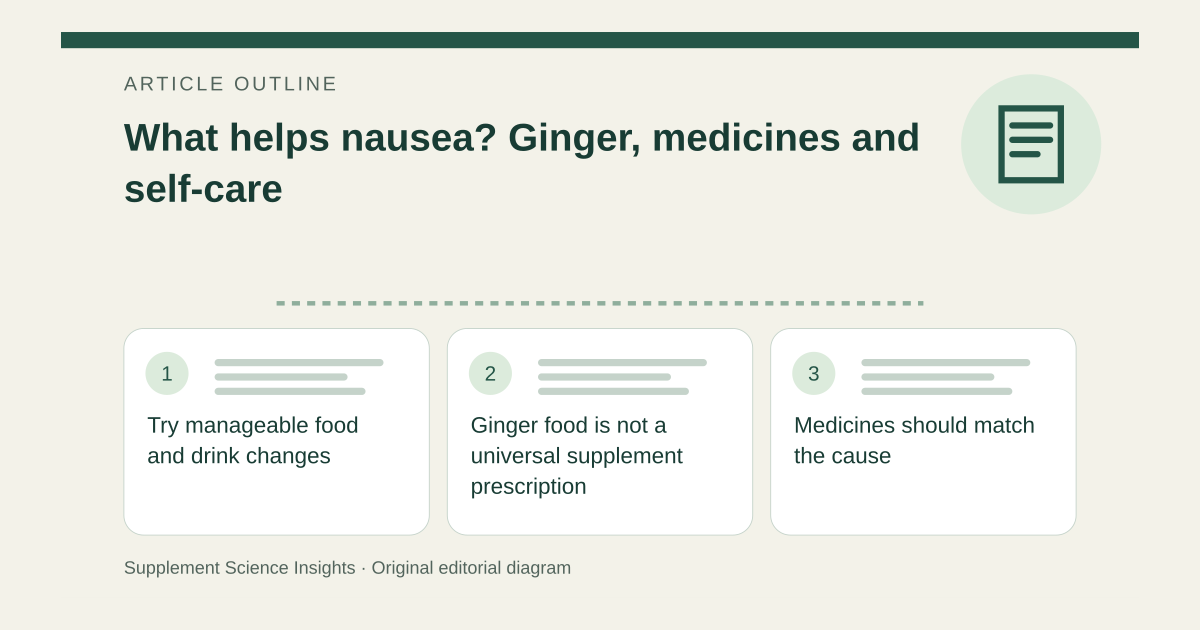
Try manageable food and drink changes
NHS guidance suggests fresh air, small regular sips of a cold drink, ginger or peppermint tea, and smaller frequent meals. Greasy foods, strong cooking smells and lying down soon after eating may make nausea harder to manage. Individual tolerance matters. [1]
Ginger food is not a universal supplement prescription
A suggestion to try ginger tea does not establish one concentrated capsule dose for every cause of nausea. Product strength, pregnancy, health conditions and medicines can change suitability. Supplements should not delay assessment of persistent vomiting or another illness. [1][2]
Medicines should match the cause
Nausea can arise from infections, medicines, migraine, pregnancy and other conditions. A clinician may prescribe an anti-sickness medicine when appropriate. Choosing one without understanding the context can miss the underlying problem or add side effects. [1]
Know when to get help
Imagine nausea keeps recurring despite small meals. Arrange assessment instead of repeatedly changing products. Nausea with heavy or tight chest pain, pain spreading to the arm or jaw, or shortness of breath requires emergency help. Inability to maintain fluids also needs prompt advice. [1]
| Situation | Practical response |
|---|---|
| Mild transient nausea | Small sips and meals |
| Ginger capsule | Not equivalent to every tea preparation |
| Repeated episodes | Assess the cause |
| Chest pain or breathlessness | Emergency help |
Sources for this article
- Feeling sick (nausea) - NHS
Source consulted: 2026-09-21. This is a reference resource, not a claim that we conducted the studies or tested a product. - Dietary Supplements: What You Need to Know - Consumer
Source consulted: 2026-09-21. This is a reference resource, not a claim that we conducted the studies or tested a product.