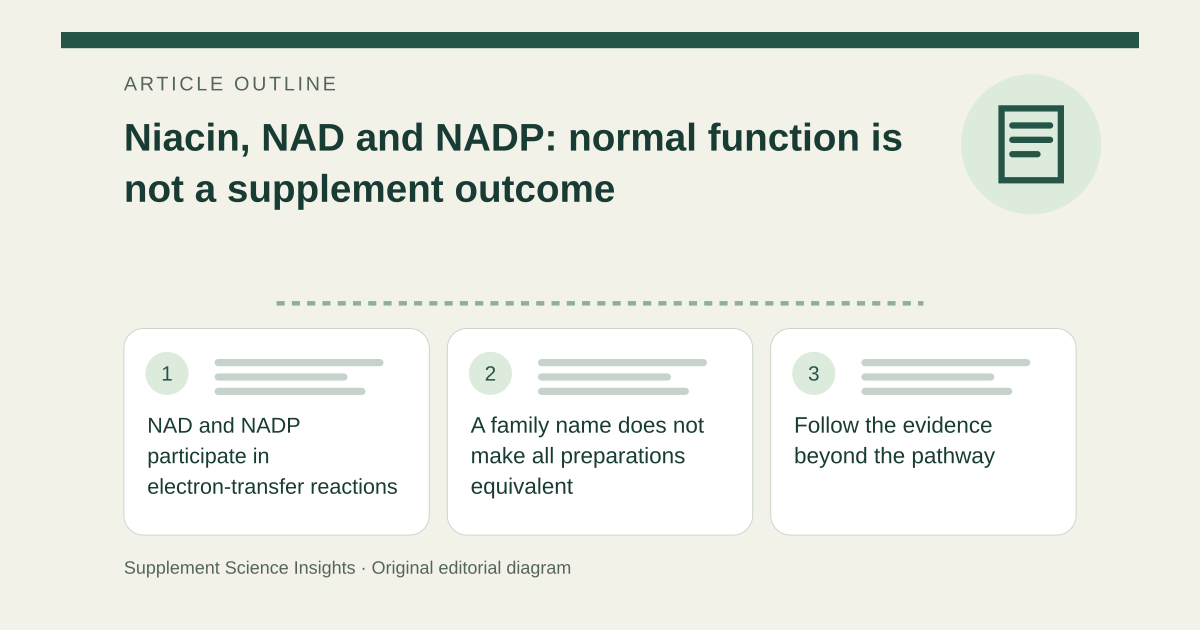
NAD and NADP participate in electron-transfer reactions
NIH ODS describes NAD as important in reactions that extract energy from carbohydrates, fats and proteins. NADP supports biosynthetic processes and cellular antioxidant functions. [1]
These are normal metabolic roles. A diagram showing a nutrient in an essential pathway cannot by itself establish a clinical benefit from increasing its intake. [1]
A family name does not make all preparations equivalent
Niacin includes nicotinic acid, nicotinamide and related derivatives. They can contribute to niacin metabolism, but preparation, amount and safety profile still matter when evaluating a product. [1]
Evidence should identify the actual intervention and outcome. A change in a laboratory marker is also different from showing that people live longer, feel less tired or develop less disease. [1]
Follow the evidence beyond the pathway
Imagine a product raises an NAD-related marker. That finding does not independently demonstrate an improvement in daily functioning or long-term health.
| Detail | Interpretation |
|---|---|
| NAD/NADP | Normal coenzyme roles |
| Measured marker | Intermediate result |
| Health outcome | Requires direct evidence |
Sources for this article
- Niacin - Health Professional Fact Sheet
Source consulted: 2026-09-17. This is a reference resource, not a claim that we conducted the studies or tested a product.