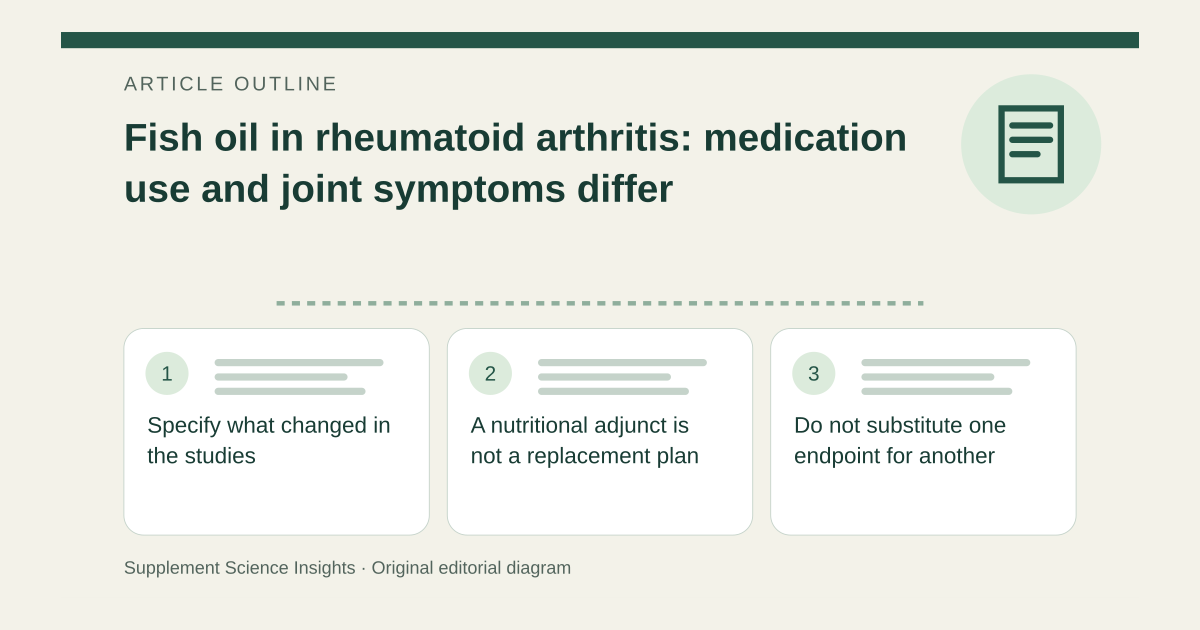
Specify what changed in the studies
ODS describes older trials in rheumatoid arthritis in which omega-3 supplementation reduced use of some anti-inflammatory medicines. Effects on painful or tender joints, swelling and morning stiffness were less consistent. [1]
A reduction in medication use is an outcome worth studying, but it does not independently establish prevention of joint damage. Nor should rheumatoid arthritis findings be applied automatically to every cause of joint pain or osteoarthritis. [1]
A nutritional adjunct is not a replacement plan
Rheumatoid arthritis is an inflammatory autoimmune disease with established medical treatment. A supplement should not be used as a reason to stop disease-modifying therapy or reduce another medicine without the treating clinician’s review. [1]
The cited summary does not establish one personal fish-oil dose for all arthritis. Product EPA/DHA content, concurrent medicines and the intended outcome need consideration; total oil mass is not the same as the active fatty-acid amount. [1]
Do not substitute one endpoint for another
Imagine a study reports less pain-medicine use but inconsistent joint-swelling changes. Calling that proof of halted disease progression would make a claim the reported outcomes do not support.
| Detail | Interpretation |
|---|---|
| Medication use | One study outcome |
| Joint symptoms | Not consistently improved |
| Disease control | Separate clinical question |
Sources for this article
- Omega-3 Fatty Acids - Health Professional Fact Sheet
Source consulted: 2026-09-17. This is a reference resource, not a claim that we conducted the studies or tested a product.