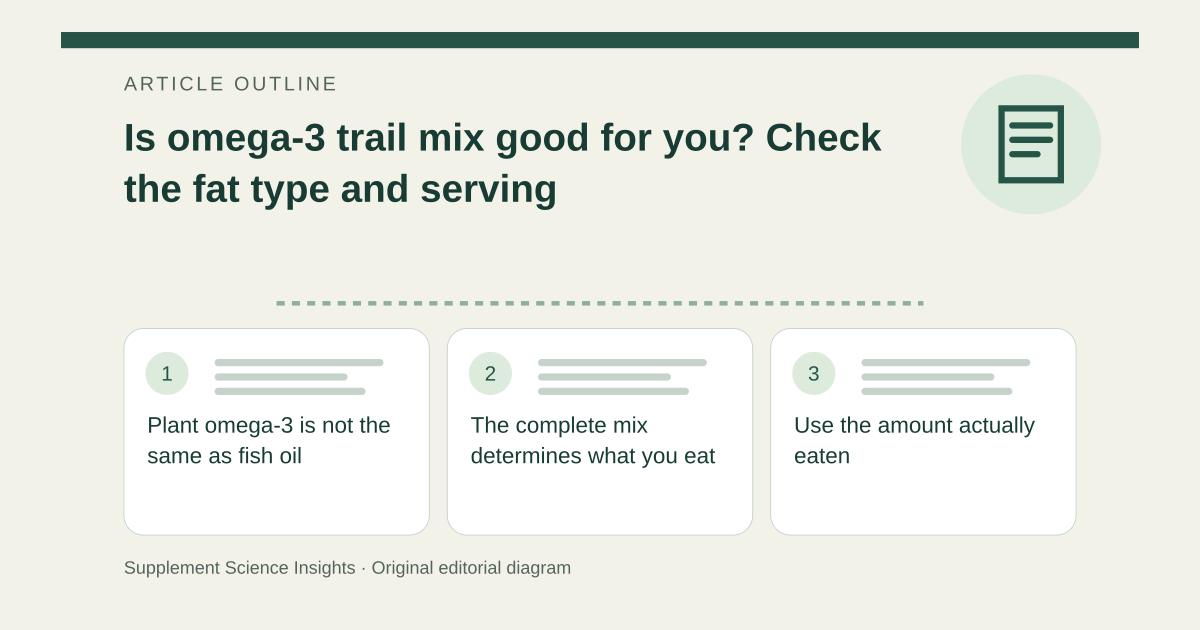
Plant omega-3 is not the same as fish oil
ODS identifies walnuts and chia seeds as ALA sources. The body can convert ALA to EPA and DHA, but conversion is limited. A plant-based omega-3 claim therefore should not be read as a declaration of an equivalent amount of EPA plus DHA. [1]
The complete mix determines what you eat
Nuts, seeds, dried fruit, chocolate or sweetened pieces may appear in different proportions. The Nutrition Facts panel can clarify calories, added sugars, sodium and fibre per serving. An omega-3 message does not replace that information. [2]
Use the amount actually eaten
A bag can contain multiple servings. Multiply the per-serving values by the number of servings consumed when comparing snack options. A listed serving is a reference quantity for the label, not proof that every person should eat precisely that amount. [2]
A food contribution is different from a treatment dose
An ALA-containing snack can contribute to the diet. It is not a substitute for a prescribed omega-3 medicine or evidence that the mix treats a cardiovascular condition. Those claims concern different preparations and outcomes. [1]
Make a like-for-like comparison
Imagine a label lists 170 calories for one serving and the portion eaten is two servings. That portion supplies 340 calories, along with twice each listed nutrient amount. The arithmetic helps compare the snack without judging it solely by the front-of-pack claim. [2]
| Food choice | Relevant check |
|---|---|
| Walnuts or chia | Usually an ALA contribution |
| Two servings | Double the listed per-serving amounts |
| Omega-3 claim | Not a complete nutritional assessment |
Sources for this article
- Omega-3 Fatty Acids - Health Professional Fact Sheet
Source consulted: 2026-09-20. This is a reference resource, not a claim that we conducted the studies or tested a product. - How to Understand and Use the Nutrition Facts Label | FDA
Source consulted: 2026-09-20. This is a reference resource, not a claim that we conducted the studies or tested a product.