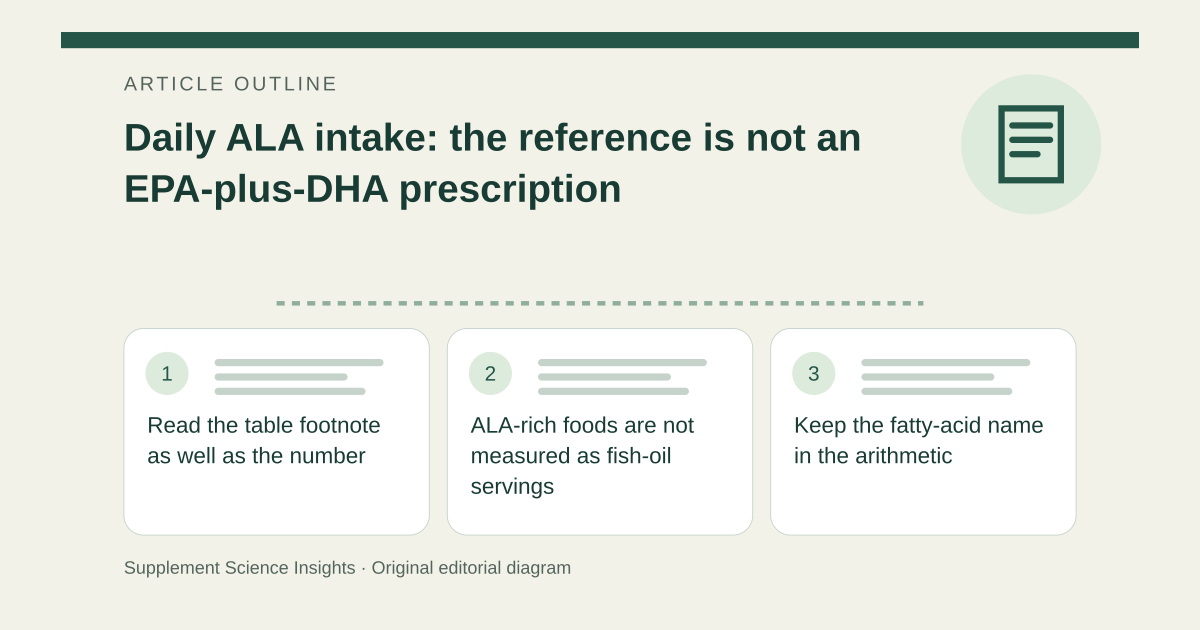
Read the table footnote as well as the number
ODS lists ALA adequate intakes of 1.6 g daily for adult men and 1.1 g for adult women, with 1.4 g in pregnancy and 1.3 g during lactation. The infant entries use total omega-3s, but the entries from age one onward refer to ALA. [1]
An adequate intake is a nutritional reference, not a treatment regimen. The same table therefore cannot define how much EPA or DHA someone should take for a clinical condition. [1]
ALA-rich foods are not measured as fish-oil servings
Flaxseed oil, chia seeds, walnuts and canola oil provide ALA. Fish and some algae provide other omega-3 forms. Comparing only the grams while omitting the fatty-acid name can make unlike amounts appear interchangeable. [1]
Food contributions can help meet an ALA reference without implying that every person needs an additional supplement. Consider the complete dietary pattern and the reason for any proposed intervention. [1]
Keep the fatty-acid name in the arithmetic
Imagine a label provides 1 g ALA. It supplies 1,000 mg ALA, not 1,000 mg EPA plus DHA. Converting grams to milligrams does not change the substance being measured.
| Detail | Interpretation |
|---|---|
| Adult male AI | 1.6 g ALA |
| Adult female AI | 1.1 g ALA |
| EPA/DHA | Different fatty acids |
Sources for this article
- Omega-3 Fatty Acids - Health Professional Fact Sheet
Source consulted: 2026-09-17. This is a reference resource, not a claim that we conducted the studies or tested a product.