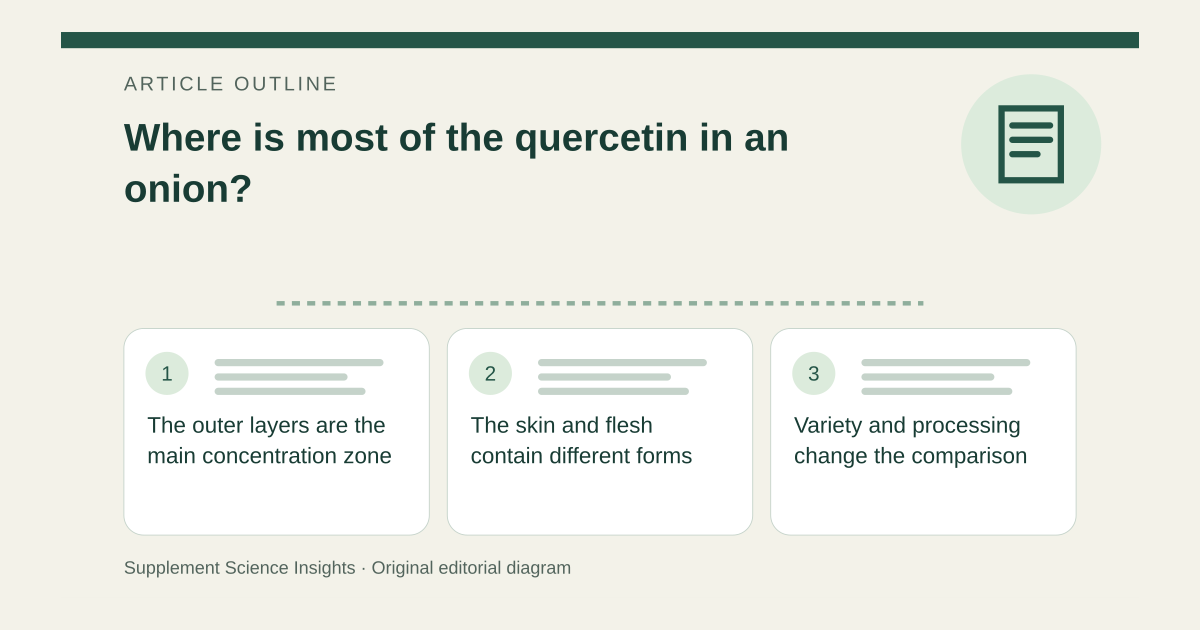
The outer layers are the main concentration zone
A food-focused review describes quercetin largely in outer skins and rings, consistent with flavonols’ role in protecting exposed plant tissues. Removing several edible outer layers can therefore remove a substantial fraction of these compounds. [1]
The skin and flesh contain different forms
Onion flesh contains mainly quercetin glucosides, while the skin and outermost layers contain more free quercetin, also called the aglycone. A report about one form should not be interpreted as a ranking of total quercetin equivalents under every analytical method. [1]
Variety and processing change the comparison
A 2021 review describes differences among red, yellow and white onions and changes with processing. Fresh-weight and dry-weight values also answer different concentration questions. There is no one precise amount that applies to every onion or serving. [2]
Use the information as food context
Imagine trimming an onion for dinner. Remove the dry or damaged material as usual and avoid discarding sound edible rings unnecessarily. A study of concentrated peel extracts is not a recipe for a standardized supplement dose, and food quercetin does not guarantee a therapeutic effect. [2][3]
| Detail | Why it matters |
|---|---|
| Outer versus inner rings | Concentration differs |
| Aglycone versus glucoside | Different chemical forms |
| Fresh versus dry weight | Different denominators |
| Whole food versus extract | Different exposures |
Sources for this article
- Quercetin and Its Anti-Allergic Immune Response - PMC
Source consulted: 2026-09-21. This is a reference resource, not a claim that we conducted the studies or tested a product. - Recent Advances in Bioactive Compounds, Health Functions, and Safety Concerns of Onion (Allium cepa L.) - PMC
Source consulted: 2026-09-21. This is a reference resource, not a claim that we conducted the studies or tested a product. - Quercetin | Memorial Sloan Kettering Cancer Center
Source consulted: 2026-09-21. This is a reference resource, not a claim that we conducted the studies or tested a product.