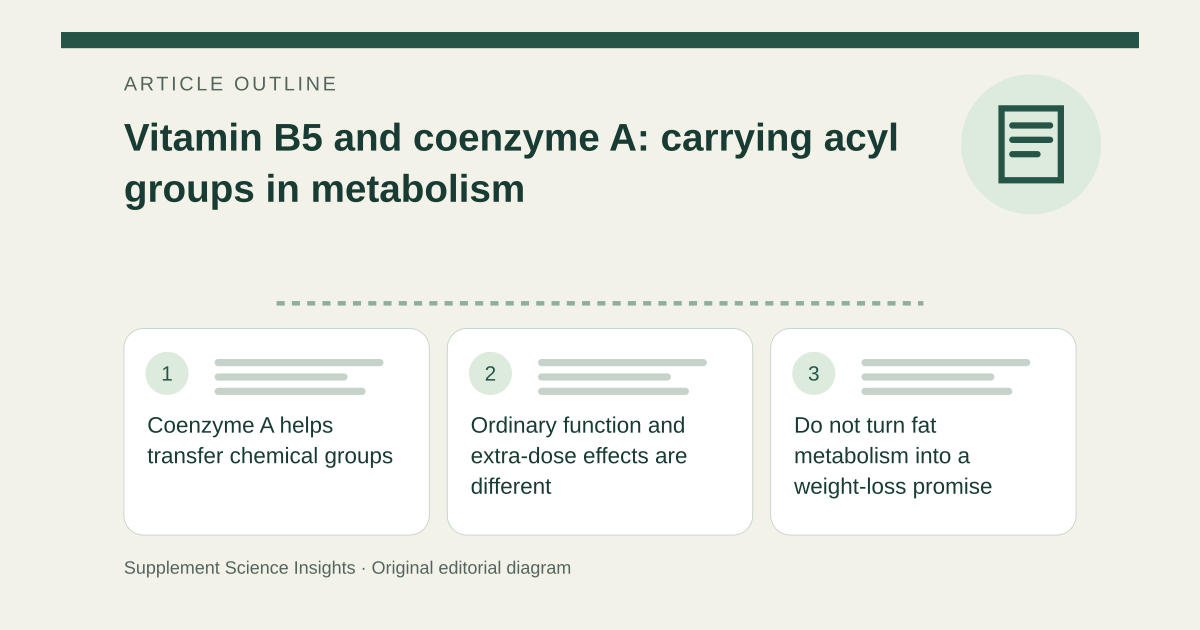
Coenzyme A helps transfer chemical groups
NIH ODS describes CoA as essential to fatty-acid synthesis and breakdown, as well as transfer of acetyl and other acyl groups. Acyl carrier protein also has a role in fatty-acid synthesis. [1]
The same nutrient can support both building and breaking down molecules. Calling it a fat-metabolism vitamin therefore does not establish that supplementation produces body-fat loss. [1]
Ordinary function and extra-dose effects are different
Food sources include chicken, beef, whole grains, mushrooms and some fortified cereals. Deficiency is rare outside severe malnutrition and often occurs with other nutrient shortages. NIH ODS describes numbness or burning in hands and feet, fatigue and digestive disturbances in depletion settings. These symptoms have many possible causes and do not identify B5 deficiency on their own; the evidence is not a reason to self-diagnose from a symptom list. [1]
A wide variety of plant and animal foods contain pantothenic acid. Its essential role supports meeting nutritional needs, not assuming that more always increases metabolic activity. [1]
A product claim about weight, energy or skin should be assessed using evidence for that outcome and preparation. CoA’s presence in a biochemical pathway is not a substitute for such evidence. [1]
Do not turn fat metabolism into a weight-loss promise
Imagine an advertisement says B5 helps process fats. That statement alone does not show that the advertised amount reduces stored body fat.
| Detail | Interpretation |
|---|---|
| CoA | Acyl-group handling |
| Fat metabolism | Includes synthesis and breakdown |
| Weight-loss effect | Not implied by function |
Sources for this article
- Pantothenic Acid - Health Professional Fact Sheet
Source consulted: 2026-09-17. This is a reference resource, not a claim that we conducted the studies or tested a product.