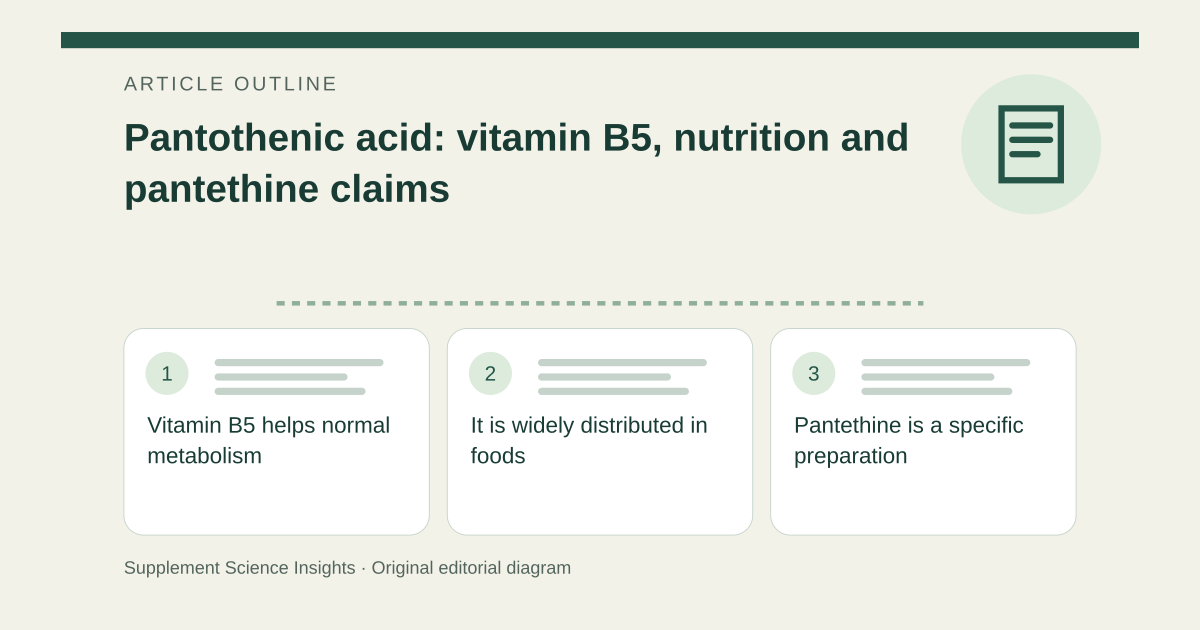
Vitamin B5 helps normal metabolism
Pantothenic acid is vitamin B5. It is needed to make coenzyme A, which participates in many reactions involving fats and other nutrients. The fact that B5 helps the body use food does not mean a supplement creates extra energy or treats unexplained tiredness. [1]
A nutrition claim and a symptom-treatment claim therefore need different support. A biochemical diagram can explain the first; the second requires evidence that a particular intervention improves a meaningful outcome in a relevant group of people. [1]
It is widely distributed in foods
Meat, poultry, eggs, milk, mushrooms, potatoes, whole grains, legumes and seeds can contribute pantothenic acid. The U.S. adult adequate intake is 5 mg daily, with values of 6 mg during pregnancy and 7 mg during breastfeeding. Deficiency is very rare in the United States. [2]
These are total nutritional intake references. They do not mean that every adult should add a 5 mg capsule, nor that a much larger quantity provides proportionally greater benefit. Existing multivitamins and fortified products may already contain B5. [2]
Pantethine is a specific preparation
Calcium pantothenate is a common supplemental form. Pantethine is a related compound that has been studied for effects on blood lipids. Those studies should not be automatically applied to every B5 product or to a B-complex supplement with several active ingredients. [1][2]
NIH describes promising but incomplete findings for pantethine and cholesterol-related measures. A change in LDL or triglycerides does not, by itself, establish fewer cardiovascular events. It also does not make a supplement an interchangeable substitute for prescribed lipid treatment. [1][2]
An absent upper limit does not mean unlimited use
No tolerable upper intake level has been established for pantothenic acid because evidence is insufficient. Very high intakes can cause gastrointestinal symptoms, including diarrhea. A familiar water-soluble vitamin is therefore not a reason to ignore dose or tolerance. [1]
Tell the care team about the actual preparation if it is being used for a medical purpose. A product may also contain other vitamins or stimulants whose effects should not be attributed to B5 merely because its amount is printed prominently. [1]
Keep B5 separate from the B-complex total
Imagine a product declares 10 mg pantothenic acid per two-capsule serving. Its declared amount per capsule is 5 mg. Another product says only “B-complex, 100 mg” without individual quantities; that statement does not establish its B5 content.
Do not divide the blend equally among the listed B vitamins. Their masses are not required to be equal. The example checks disclosure and serving arithmetic rather than recommending a supplement or establishing that the contents were independently tested.
| Label | B5 amount established |
|---|---|
| 10 mg per two capsules | 5 mg per capsule |
| 100 mg B-complex; individual amounts absent | Unknown |
Define what success would mean
For a dietary question, ask whether intake is adequate. For a cholesterol claim, ask whether the exact pantethine preparation, comparison and outcome were studied. For persistent fatigue, avoid turning a normal metabolic role into an assumed diagnosis.
This distinction keeps a useful nutrient reference from becoming a catch-all treatment claim. The linked sources are authoritative summaries; no brand ranking, independent product assay or complete cardiovascular evidence review is represented here.
Sources for this article
- NIH ODS — Pantothenic Acid, professional fact sheet
Source consulted: 2026-09-17. This is a reference resource, not a claim that we conducted the studies or tested a product. - NIH ODS — Pantothenic Acid, consumer fact sheet
Source consulted: 2026-09-17. This is a reference resource, not a claim that we conducted the studies or tested a product.