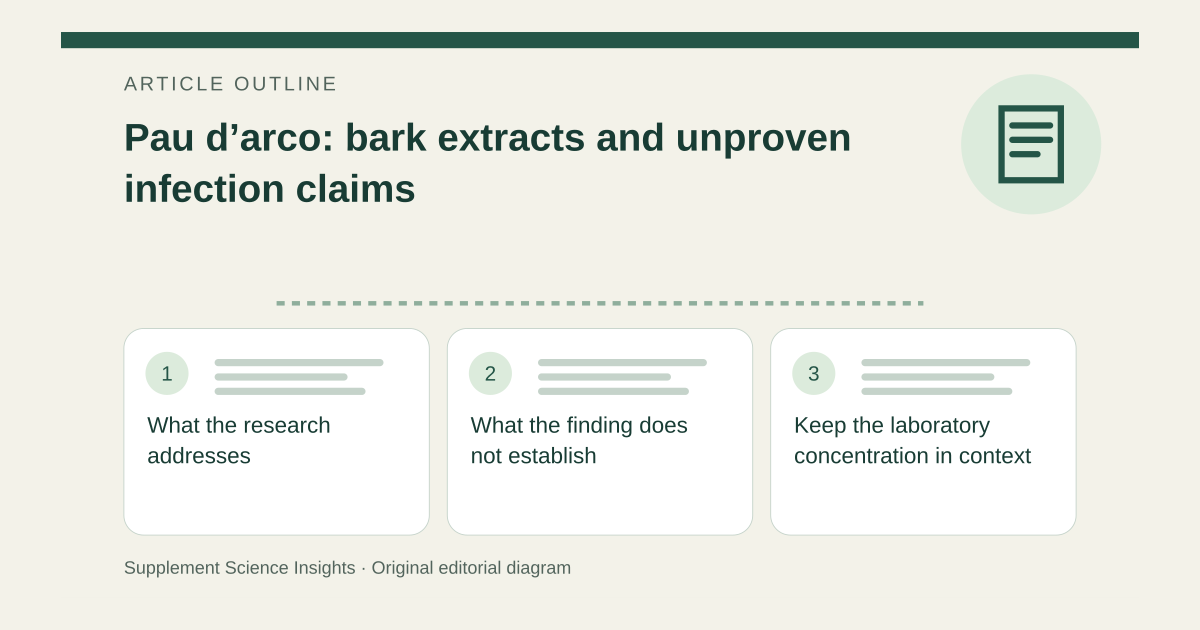
What the research addresses
Pau d'arco comes from the inner bark of Tabebuia trees and is sold as tea or concentrated preparations. MSK describes predominantly preclinical evidence and limited early human findings. Antibacterial or antifungal activity in a laboratory does not establish a dependable treatment in people. [1]
What the finding does not establish
An isolated compound such as lapachol is not the same intervention as a bark tea. Findings about a particular preparation or narrowly defined symptom cannot support every infection or cancer claim attached to the plant. [1]
Keep the laboratory concentration in context
Suppose an extract inhibits a fungus in a dish. Before calling a tea effective, researchers would need to establish whether a relevant exposure can be achieved in people, whether it improves the actual infection and whether unwanted effects are acceptable. The laboratory result begins that inquiry; it does not finish it.
A citation can therefore be accurate and still fail to support the advertisement. Ask what organism, preparation and clinical outcome were studied. If those details are missing, do not turn a broad term such as “antifungal” into a conclusion about the problem you are trying to address.
| Hypothetical finding or choice | What it means |
|---|---|
| Growth inhibited in a dish | Does not establish human treatment |
| Lapachol was investigated | Not automatically evidence for bark tea |
| A marketed infection claim | Needs the organism, preparation and outcome specified |
Safety and treatment considerations
Nausea, vomiting and urine discoloration have been reported. Pau d'arco may interact with blood-thinning medicines; clinical relevance is uncertain. Reproductive toxicity findings for lapachol in animals are an additional reason not to infer safety during pregnancy or assume a home preparation is benign. [1]
A practical next step
No brewing instructions, therapeutic dose or product recommendation is given here. A suspected infection calls for an appropriate diagnosis and treatment discussion rather than an experiment with an uncertain bark extract.
Sources for this article
- Memorial Sloan Kettering Cancer Center — Pau d’Arco
Source consulted: 2026-09-17. This is a reference resource, not a claim that we conducted the studies or tested a product.