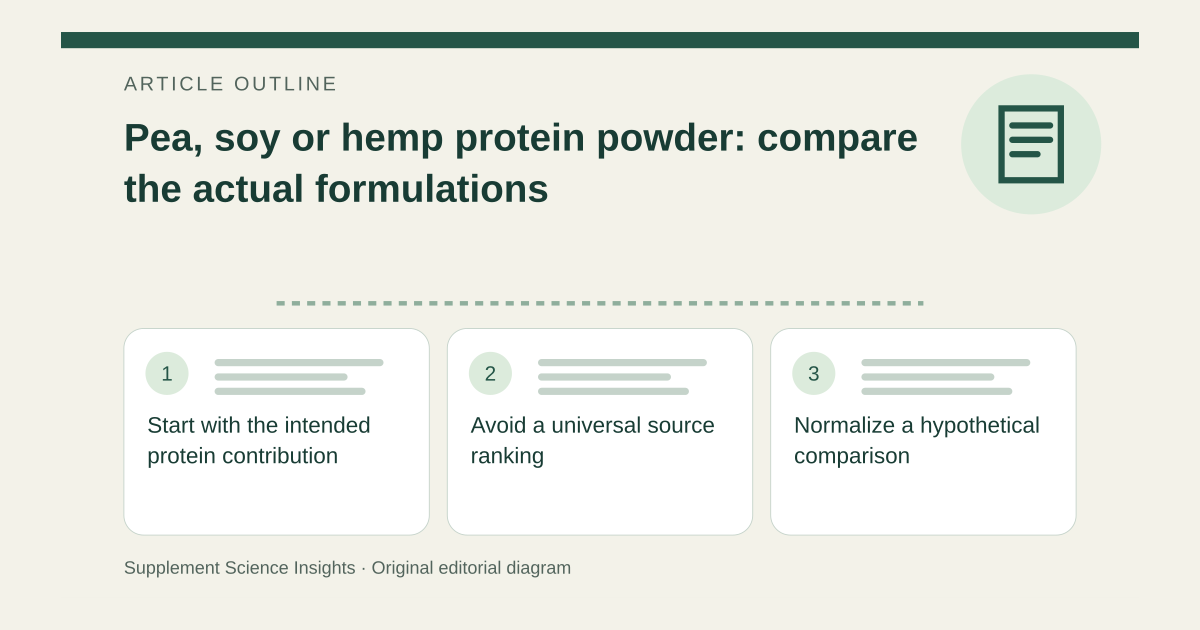
Start with the intended protein contribution
Plant foods can provide dietary protein, including essential amino acids. A powder’s name does not tell you how many grams a serving supplies. Pea, soy and hemp products can differ in processing and concentration, so compare the full labels rather than assuming equal scoop weights are equal protein portions. [1]
Avoid a universal source ranking
For training, both protein amount and quality matter. A claim that one plant source is always best needs more than a name or a selected amino acid on the front panel. Consider the complete diet, relevant source restrictions and whether the finished formula is a single ingredient or a blend. This article does not claim to have assayed or ranked current retail products. [2]
Normalize a hypothetical comparison
Suppose three powders each use a 30 g serving but declare 24 g, 21 g and 15 g protein. Their declared protein concentrations are 80%, 70% and 50% respectively. These are invented label examples, not typical values assigned to pea, soy or hemp. Compare the amount you actually intend to consume, other nutrients and cost on the same basis. [2]
| Hypothetical protein in 30 g powder | Declared concentration |
|---|---|
| 24 g | 80% |
| 21 g | 70% |
| 15 g | 50% |
Sources for this article
- Protein in diet: MedlinePlus Medical Encyclopedia
Source consulted: 2026-09-20. This is a reference resource, not a claim that we conducted the studies or tested a product. - Dietary Supplements for Exercise and Athletic Performance - Health Professional Fact Sheet
Source consulted: 2026-09-20. This is a reference resource, not a claim that we conducted the studies or tested a product.