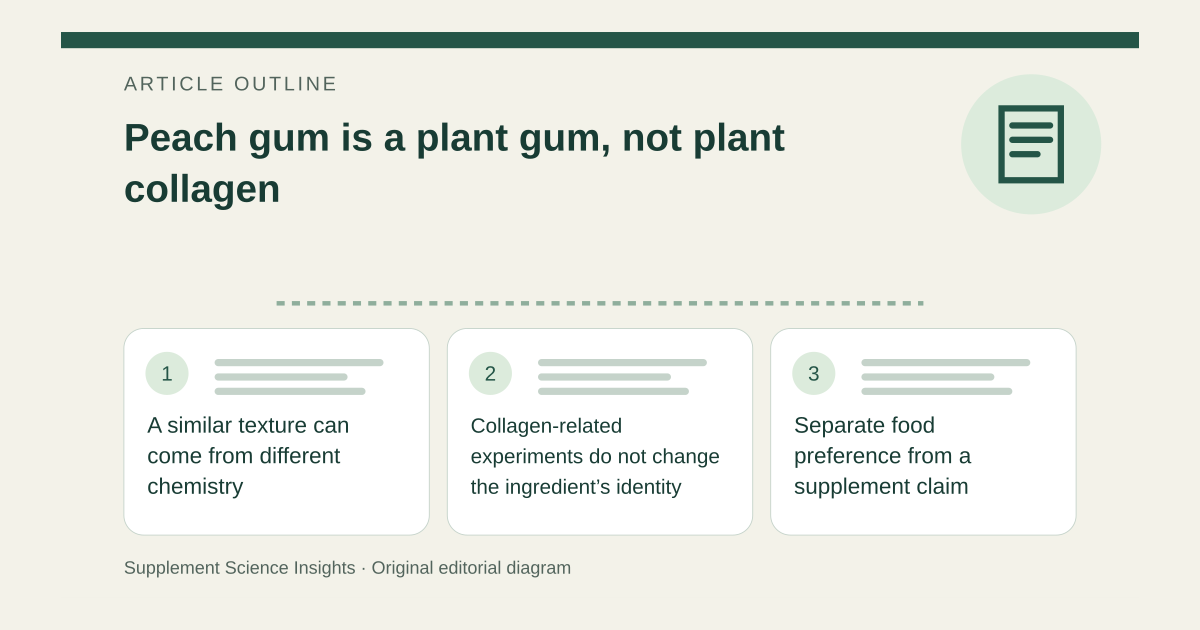
A similar texture can come from different chemistry
A 2023 compositional study characterized peach gum polysaccharides, including carbohydrate building blocks such as galactose, xylose and arabinose. Collagen is a protein with a different molecular organization. A plant-derived gum can thicken food without being collagen. [1][2]
Collagen-related experiments do not change the ingredient’s identity
The same paper studied UVB-related damage in cultured skin cells and mice. Measuring collagen-related effects in those models does not mean the gum itself contains collagen. It also does not establish that eating a peach-gum dessert improves human skin. The research used experimental preparations and nonclinical models. [1]
Separate food preference from a supplement claim
Imagine a dessert is advertised as vegan collagen because it becomes jelly-like after preparation. It may fit a plant-based food preference, but the texture is not a protein analysis or a human efficacy study. Assess any added collagen separately from the peach gum itself. [1][2]
| Observation | Interpretation |
|---|---|
| Gel-like texture | Can result from polysaccharides |
| Collagen measured in mice | Not collagen in the gum |
| Human skin benefit | Not established by that experiment |
Sources for this article
- The Mechanism of Peach Gum Polysaccharide Preventing UVB-Induced Skin Photoaging by Regulating Matrix Metalloproteinanse and Oxidative Factors - PMC
Source consulted: 2026-09-20. This is a reference resource, not a claim that we conducted the studies or tested a product. - The Extracellular Matrix of Animals - Molecular Biology of the Cell - NCBI Bookshelf
Source consulted: 2026-09-20. This is a reference resource, not a claim that we conducted the studies or tested a product.