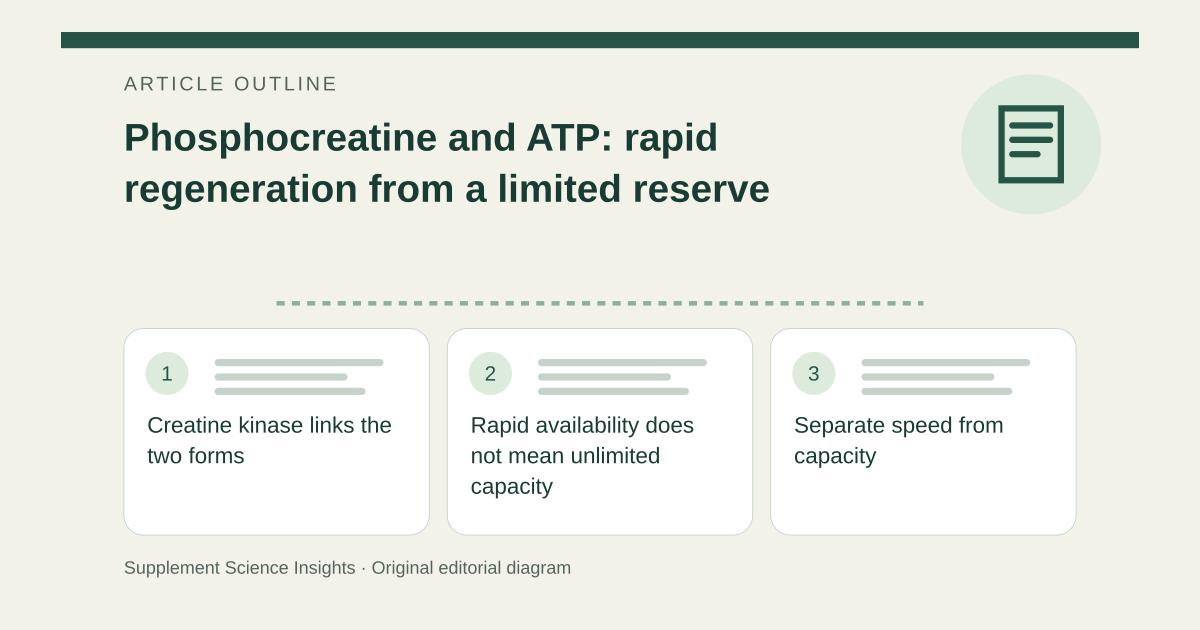
Creatine kinase links the two forms
The muscle-physiology chapter describes phosphate transfer from ATP to creatine during replenishment and transfer back from phosphocreatine to ADP when ATP demand rises. Creatine kinase catalyzes this reversible reaction. [1]
The distinction between creatine and phosphocreatine matters: the phosphorylated form carries the phosphate that can be transferred. ATP remains the immediate energy currency used by the contractile machinery. [1]
Rapid availability does not mean unlimited capacity
The phosphocreatine reserve supports very brief, intense activity and must be replenished. Other metabolic pathways also contribute energy; they do not wait for one universal second on a stopwatch before beginning. [1]
Understanding this mechanism helps explain the interest in creatine for certain exercise tasks. It does not establish a guaranteed performance gain or a treatment for every condition associated with fatigue. [1]
Separate speed from capacity
Imagine a short, intense effort with a sudden increase in ATP demand. Rapid phosphate transfer can help meet that demand, but continuing the effort requires contributions from other energy systems as well.
| Detail | Interpretation |
|---|---|
| Phosphocreatine | Rapid phosphate reserve |
| ADP to ATP | Regeneration step |
| Sustained activity | Needs other pathways too |
Sources for this article
- 10.3 Muscle Fiber Contraction and Relaxation - Anatomy and Physiology 2e | OpenStax
Source consulted: 2026-09-17. This is a reference resource, not a claim that we conducted the studies or tested a product.