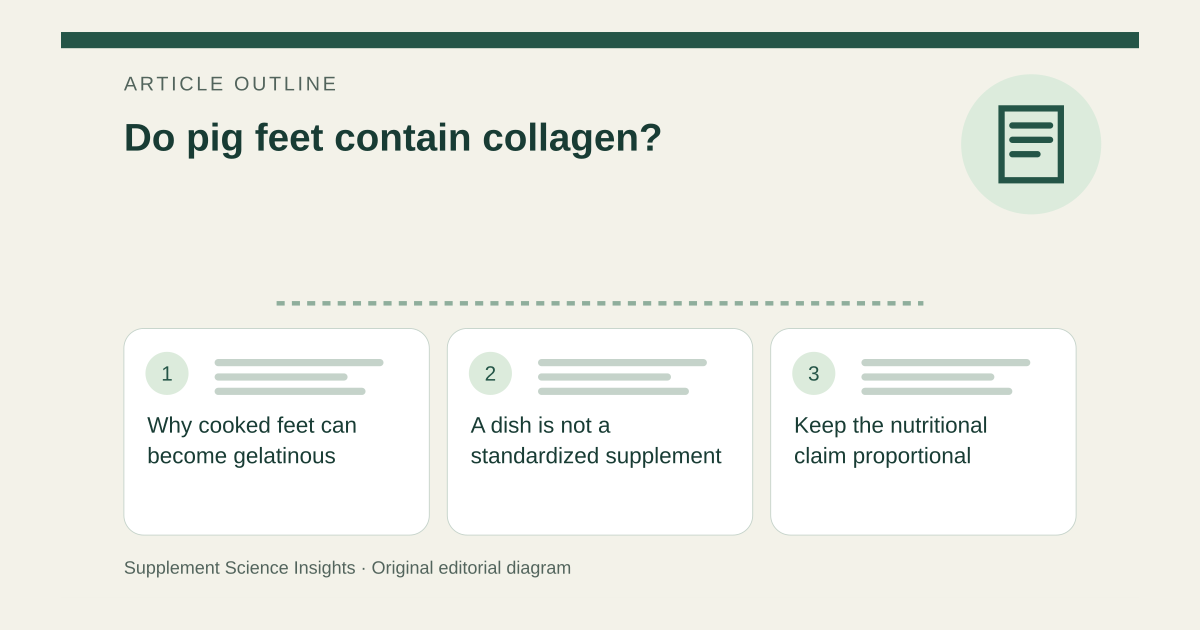
Why cooked feet can become gelatinous
Collagen is a structural protein found in skin, tendons and other connective tissues. Heat and moisture change its structure during cooking, explaining the gelatinous texture of many long-cooked dishes. That texture identifies a food property, not a measured treatment dose. [1]
A dish is not a standardized supplement
The amount in a serving varies with the edible tissue, preparation and portion. Fat, salt and other recipe ingredients also affect the meal. A generic collagen figure cannot be calculated from the weight of a bone-containing portion without compositional data. [1]
Keep the nutritional claim proportional
Imagine a bowl of pig-feet stew sets when chilled. That supports the presence of gelatin-forming material; it does not show that eating the bowl repairs cartilage. The body uses dietary amino acids along with other nutrients to make its own proteins, including collagen. [2][1]
| Detail | Meaning |
|---|---|
| Gelatinous broth | Cooking changed connective tissue |
| Portion weight | Not pure collagen weight |
| Joint repair claim | Not established by food composition |
Sources for this article
- Science of Cooking: Ask the Inquisitive Cooks!
Source consulted: 2026-09-21. This is a reference resource, not a claim that we conducted the studies or tested a product. - 18 Foods With Collagen Boosting Benefits
Source consulted: 2026-09-21. This is a reference resource, not a claim that we conducted the studies or tested a product.