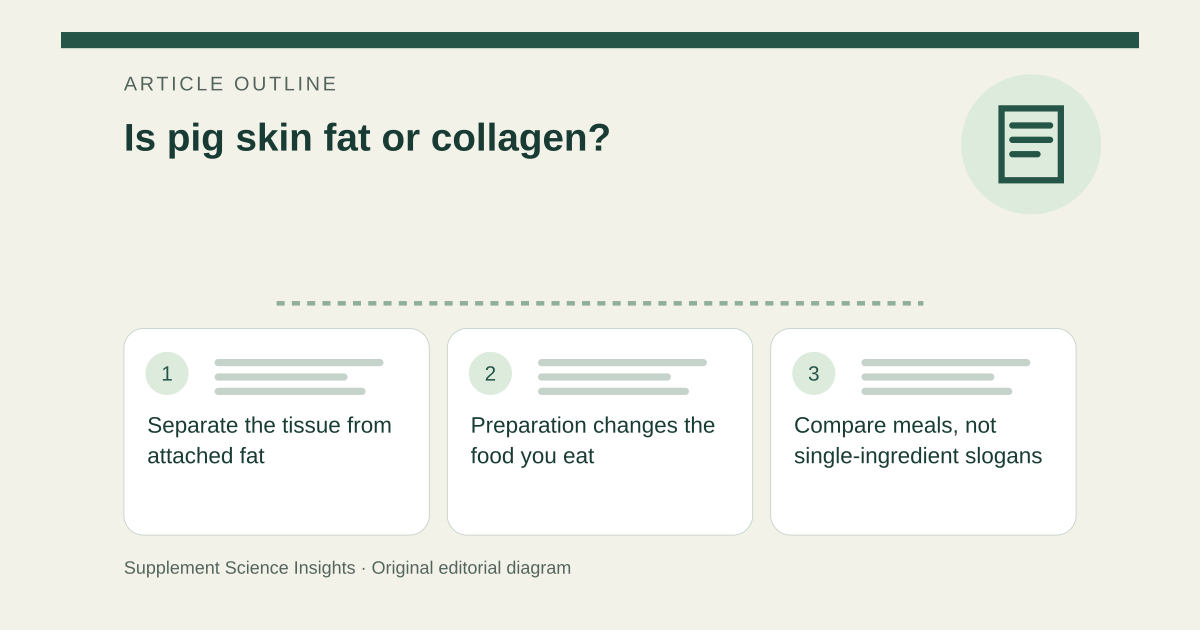
Separate the tissue from attached fat
The cooking-science reference identifies collagen in skin and distinguishes connective tissue from fat. The layer of skin and the fat beneath it can remain together in a cut or snack. Calling the whole food pure collagen overlooks those other components. [1]
Preparation changes the food you eat
Moist cooking can produce gelatin, while other preparations remove water or add ingredients. A crisp texture does not reveal a precise collagen percentage. Use the finished food’s protein, fat, energy and sodium information for a nutritional comparison rather than guessing from appearance. [1]
Compare meals, not single-ingredient slogans
Imagine two pork-skin foods have different trimming and cooking methods. Their nutrient profiles can differ even though both contain skin. Neither becomes a proven skin-aging treatment because it contains collagen; normal collagen production depends on the overall supply of nutrients. [2][1]
| Detail | Meaning |
|---|---|
| Collagen | Protein in connective tissue |
| Attached fat | Separate nutrient component |
| Finished food label | More useful than a pure-collagen claim |
Sources for this article
- Science of Cooking: Ask the Inquisitive Cooks!
Source consulted: 2026-09-21. This is a reference resource, not a claim that we conducted the studies or tested a product. - 18 Foods With Collagen Boosting Benefits
Source consulted: 2026-09-21. This is a reference resource, not a claim that we conducted the studies or tested a product.