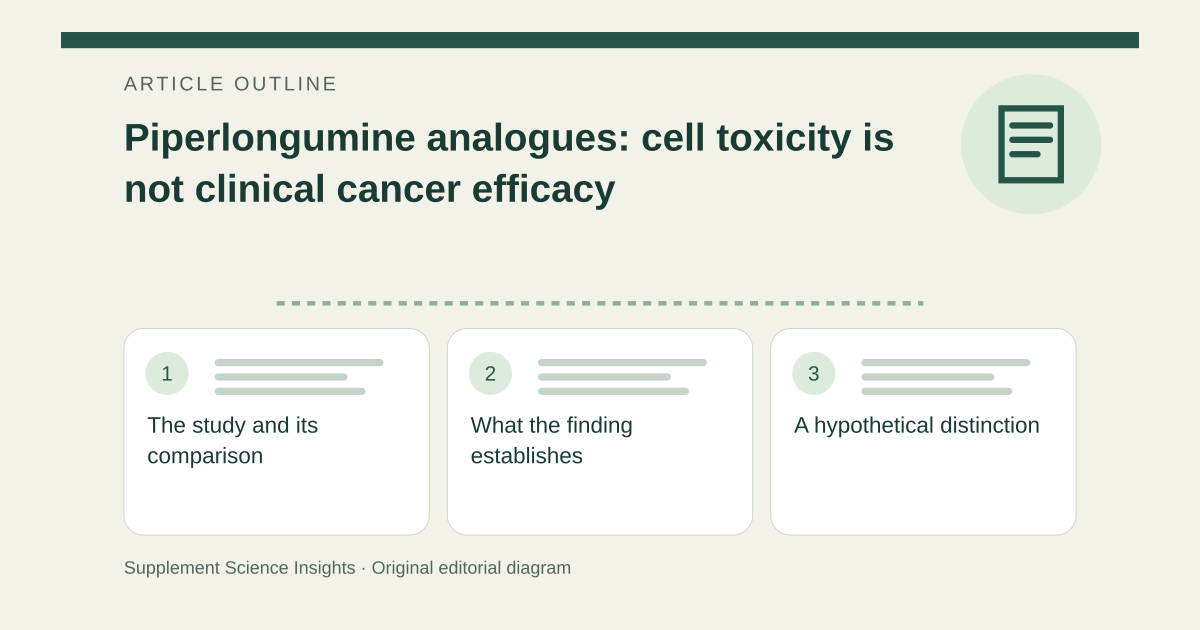
The study and its comparison
Researchers synthesized eighty chemical analogues of piperlongumine and compared their effects on reactive oxygen species, cell death and selectivity across tested cell types. [1]
Some alterations preserved oxidative changes but greatly reduced cell death. The authors proposed that additional reactive processes, including irreversible protein glutathionylation, could contribute to toxicity. [1]
What the finding establishes
This supports a mechanistic hypothesis, not evidence that an oral supplement treats a tumor. Eighty compounds is not eighty patients; sample replication and clinically achievable exposure were not established from the abstract. The authors declared no conflict of interest; complete funding was not established. Cell killing alone does not demonstrate an acceptable treatment window in people. [1]
A hypothetical distinction
Imagine two related molecules raise the same marker but kill cells differently. The marker is not a complete explanation of the outcome.
| Detail | Interpretation |
|---|---|
| Measured outcome | Keep the endpoint specific |
| Study preparation | Not every retail product |
| Remaining uncertainty | Not resolved by a mechanism |
Sources for this article
- Synthesis, cellular evaluation, and mechanism of action of piperlongumine analogs.
Source consulted: 2026-09-19. This is a reference resource, not a claim that we conducted the studies or tested a product.