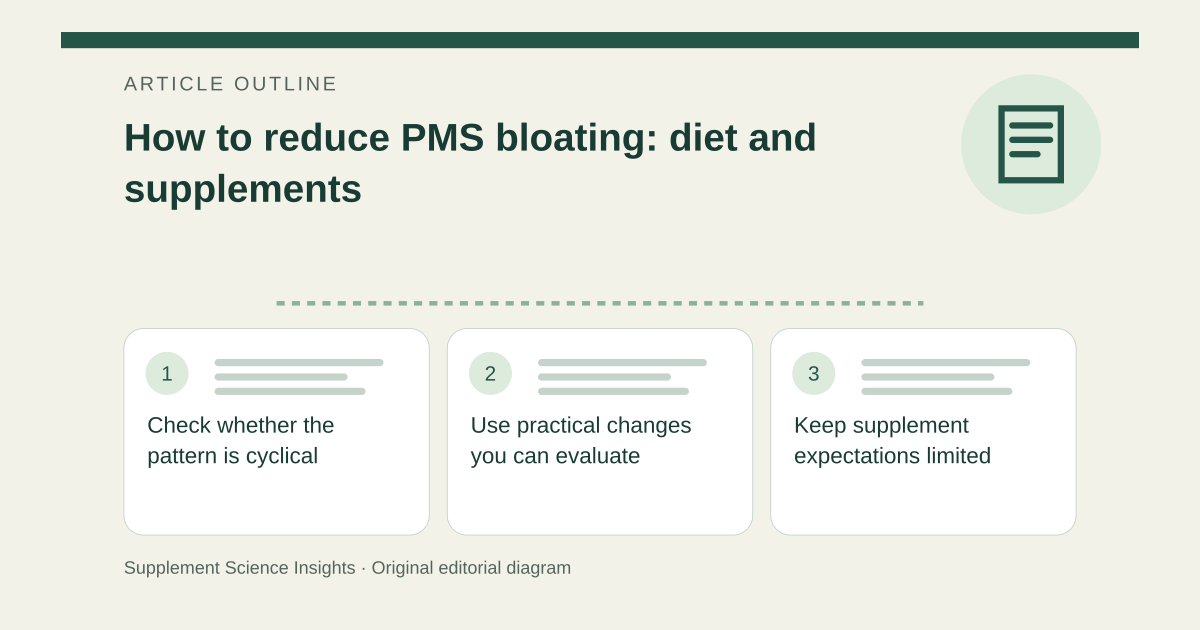
Check whether the pattern is cyclical
NHS advises a symptom diary over at least two menstrual cycles. Record bloating, bowel changes, pain and the timing of bleeding. A recurring premenstrual pattern is useful information, but symptoms that continue throughout the month may need a different explanation. [1]
Use practical changes you can evaluate
Regular activity, adequate sleep and balanced eating are recommended self-care measures. Smaller, more frequent meals may be easier to tolerate. Change one manageable habit at a time rather than assuming every bloating episode requires a restrictive diet or cleanse. [1]
Keep supplement expectations limited
NHS lists calcium, vitamin D, magnesium and B6 among products used for PMS but notes limited supporting evidence. That does not establish a specific best product for bloating. Review doses, duplicate nutrients and medicines before taking them regularly. [1][2]
Seek care when symptoms disrupt life
Imagine bloating repeatedly affects daily activities despite simple changes. Discuss PMS treatment options, which may include hormonal treatment or other symptom-directed care. Do not use a diuretic or multiple supplements simply to chase a temporary change in body weight. [1][2]
| Issue | Practical interpretation |
|---|---|
| Cycle diary | Identify timing and associated symptoms |
| Meal changes | Keep nutrition adequate |
| PMS supplement | Benefit remains uncertain |
| Persistent disruption | Discuss clinical treatment |
Sources for this article
- PMS (premenstrual syndrome) - NHS
Source consulted: 2026-09-21. This is a reference resource, not a claim that we conducted the studies or tested a product. - Dietary Supplements: What You Need to Know - Consumer
Source consulted: 2026-09-21. This is a reference resource, not a claim that we conducted the studies or tested a product.