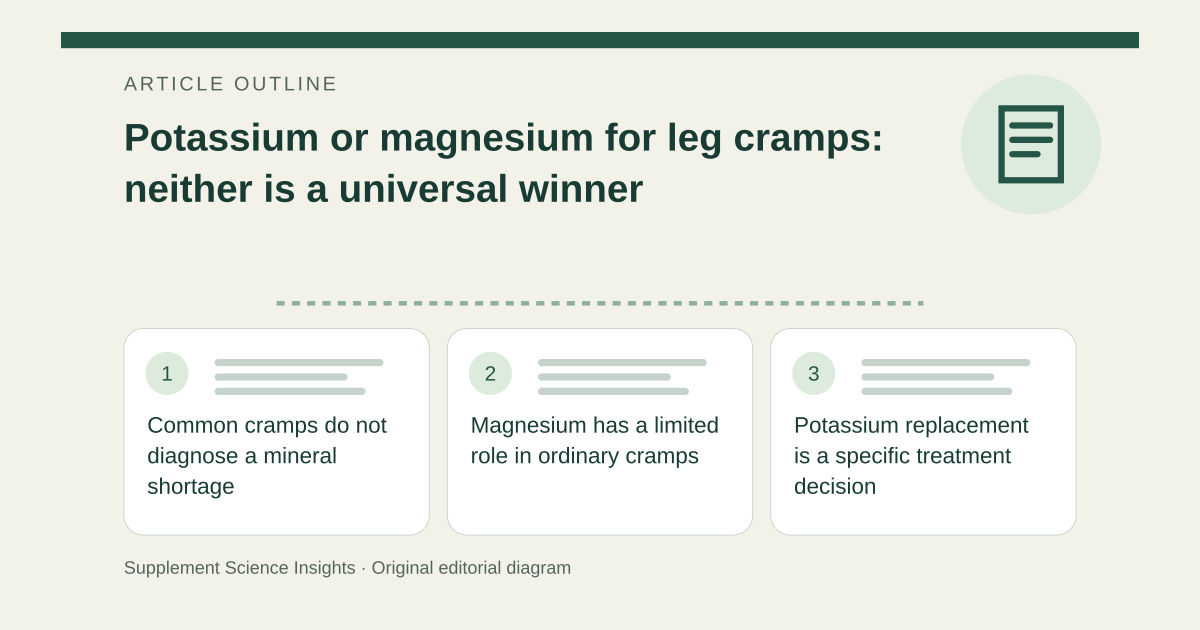
Common cramps do not diagnose a mineral shortage
Night cramps and exercise-related cramps can occur without an identified disease. NHS lists exertion, dehydration, pregnancy and certain medicines among possible contributors. A cramp alone cannot tell you that potassium is lower than magnesium or that either supplement is needed. [1]
Magnesium has a limited role in ordinary cramps
The inspected Cochrane review found magnesium unlikely to reduce ordinary cramp frequency or severity meaningfully in older adults. Pregnancy evidence was uncertain. This is different from correcting documented magnesium deficiency, which can cause cramps and other neurologic symptoms. [2][3]
Potassium replacement is a specific treatment decision
Low potassium can affect muscle function and, when severe, heart rhythm. NIH notes that low intake alone rarely causes hypokalemia in otherwise healthy people; losses, illness or medicines may matter. Magnesium depletion can also worsen potassium loss, so confirmed abnormalities sometimes need treatment together rather than a competition between products. [4]
More electrolytes are not automatically safer
Potassium can accumulate with kidney impairment or certain medicines, including potassium-sparing diuretics and ACE inhibitors. Supplemental magnesium can cause diarrhea and can accumulate when kidney function is impaired. A combination powder does not remove these problems. [4][3]
Begin with the symptom pattern
Stretching and massage can ease a cramp. Seek review if cramps disrupt sleep, last more than ten minutes, or come with swelling or numbness. Imagine cramps started after a medicine change: bring that timeline and the complete supplement list to the prescriber instead of selecting a mineral by advertising claims. [1]
| Situation | Useful distinction |
|---|---|
| Ordinary night cramps | Neither mineral is an automatic remedy |
| Confirmed low potassium | Cause and supervised replacement matter |
| Low potassium and magnesium | Both abnormalities may need attention |
Sources for this article
- Leg cramps - NHS
Source consulted: 2026-09-21. This is a reference resource, not a claim that we conducted the studies or tested a product. - Magnesium for muscle cramps | Cochrane
Source consulted: 2026-09-21. This is a reference resource, not a claim that we conducted the studies or tested a product. - Magnesium - Health Professional Fact Sheet
Source consulted: 2026-09-21. This is a reference resource, not a claim that we conducted the studies or tested a product. - Potassium - Health Professional Fact Sheet
Source consulted: 2026-09-21. This is a reference resource, not a claim that we conducted the studies or tested a product.