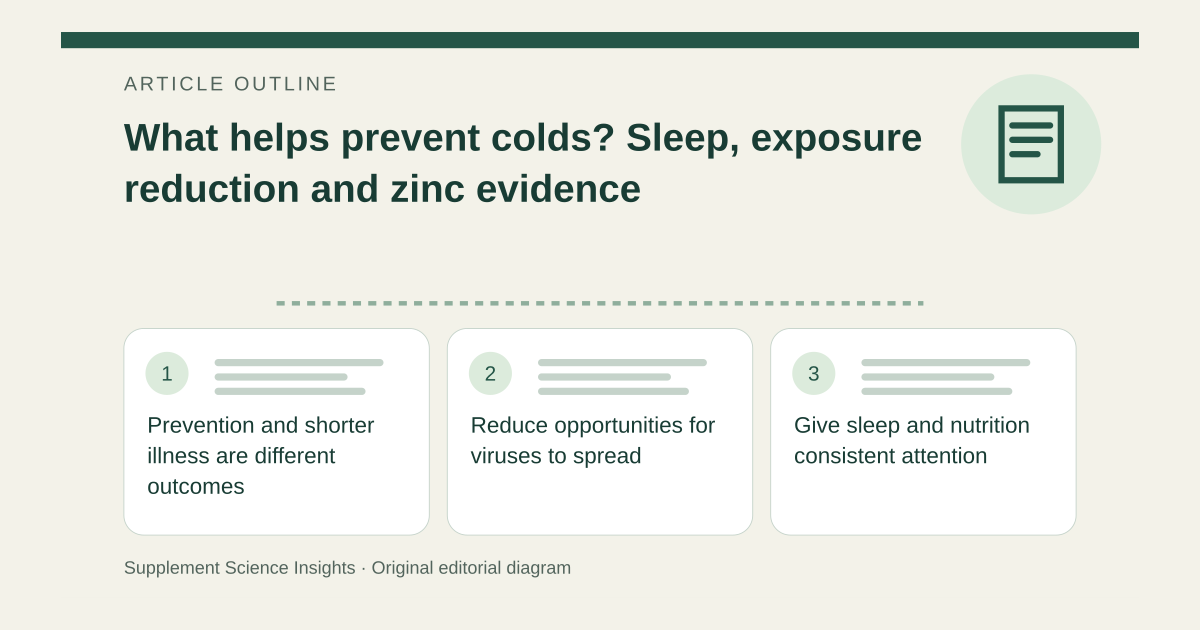
Prevention and shorter illness are different outcomes
NIH summarizes uncertain evidence that zinc may reduce the duration of a cold while having little or no preventive effect. A lozenge taken after symptoms begin is not evidence that daily zinc keeps infections away. More frequent dosing does not resolve that evidence gap. [1]
Reduce opportunities for viruses to spread
CDC explains that cold-causing viruses can spread through respiratory droplets, contact and contaminated hands or surfaces. Hand hygiene, avoiding touching the face with unwashed hands and reducing close contact with people who are ill are practical measures. Cleaner indoor air adds another layer for respiratory-virus exposure. [2][3]
Give sleep and nutrition consistent attention
CDC advises that most adults need at least seven hours of sleep and recommends a varied nutritious diet and regular activity for immune health. These are ongoing habits, not a promise that one good night or one particular food will prevent an infection. [4]
Do not mistake every cold-like illness for a cold
Influenza and COVID-19 can produce similar symptoms but carry different risks and treatment options. CDC advises testing and early treatment assessment when those infections are suspected, especially for people at higher risk. Flu vaccination protects against flu rather than all common-cold viruses. [2][3]
Choose a practical plan instead of stacking products
Imagine a person already gets enough zinc but adds several immune products every winter. The overlap may increase adverse effects without demonstrating fewer colds. Reviewing sleep, exposure and nutritional gaps is more informative than counting how many immune ingredients are included. [1][4]
| Goal | Practical step |
|---|---|
| Reduce exposure | Hygiene, cleaner air and sensible contact precautions |
| Support normal immunity | Sleep, diet and activity |
| Correct a nutrient shortfall | Target the identified need |
| Manage cold-like illness | Consider flu/COVID risk and timely care |
Sources for this article
- Zinc - Health Professional Fact Sheet
Source consulted: 2026-09-21. This is a reference resource, not a claim that we conducted the studies or tested a product. - About Common Cold | Common Cold | CDC
Source consulted: 2026-09-21. This is a reference resource, not a claim that we conducted the studies or tested a product. - Preventing Seasonal Flu | Influenza (Flu) | CDC
Source consulted: 2026-09-21. This is a reference resource, not a claim that we conducted the studies or tested a product. - Support Your Immune Health | Respiratory Illnesses | CDC
Source consulted: 2026-09-21. This is a reference resource, not a claim that we conducted the studies or tested a product.