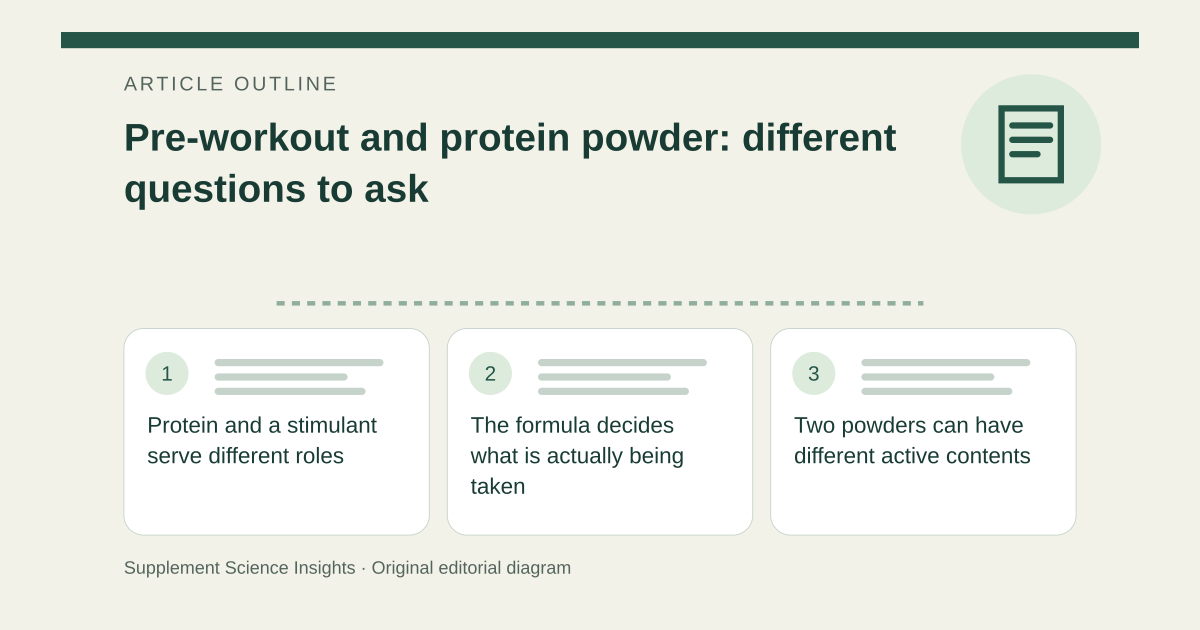
Protein and a stimulant serve different roles
Protein supplies amino acids used to maintain and repair body proteins. Caffeine, an ingredient found in some exercise products, acts on the nervous system and can alter alertness and perceived effort. [1]
Those are different roles. Calling a drink pre-workout does not establish that it contains meaningful protein, and calling a powder protein does not establish that no other active ingredient is present. [1]
The formula decides what is actually being taken
Check the protein amount separately from caffeine, creatine or other listed ingredients. A total scoop weight is not the dose of each component. [1]
ODS discusses supplements ingredient by ingredient because evidence and risks differ. Findings for protein cannot be transferred to a stimulant blend, and a performance claim on the front of a tub cannot substitute for the formula. [1]
Two powders can have different active contents
Imagine one serving lists 25 grams of protein and another lists caffeine but no protein. Both might be marketed for use around exercise, yet they cannot be substituted as equivalent protein servings.
A combined formula requires both entries to be counted. Adding a separate caffeinated drink without considering the first formula would omit part of the total exposure.
| Detail | Meaning |
|---|---|
| Protein grams | Nutrient contribution |
| Caffeine amount | A separate active ingredient |
| Total scoop mass | Not either ingredient dose |
Ingredient combinations change the safety question
ODS notes that caffeine can disturb sleep and cause symptoms such as anxiety or palpitations, and combining stimulants can increase adverse-effect potential. A protein benefit does not offset these separate concerns. [1]
No specific pre-workout product is evaluated here. Product names and intended timing are insufficient to establish composition, appropriateness or equivalence. [1]
Sources for this article
- NIH ODS: Dietary Supplements for Exercise and Athletic Performance
Source consulted: 2026-09-17. This is a reference resource, not a claim that we conducted the studies or tested a product.