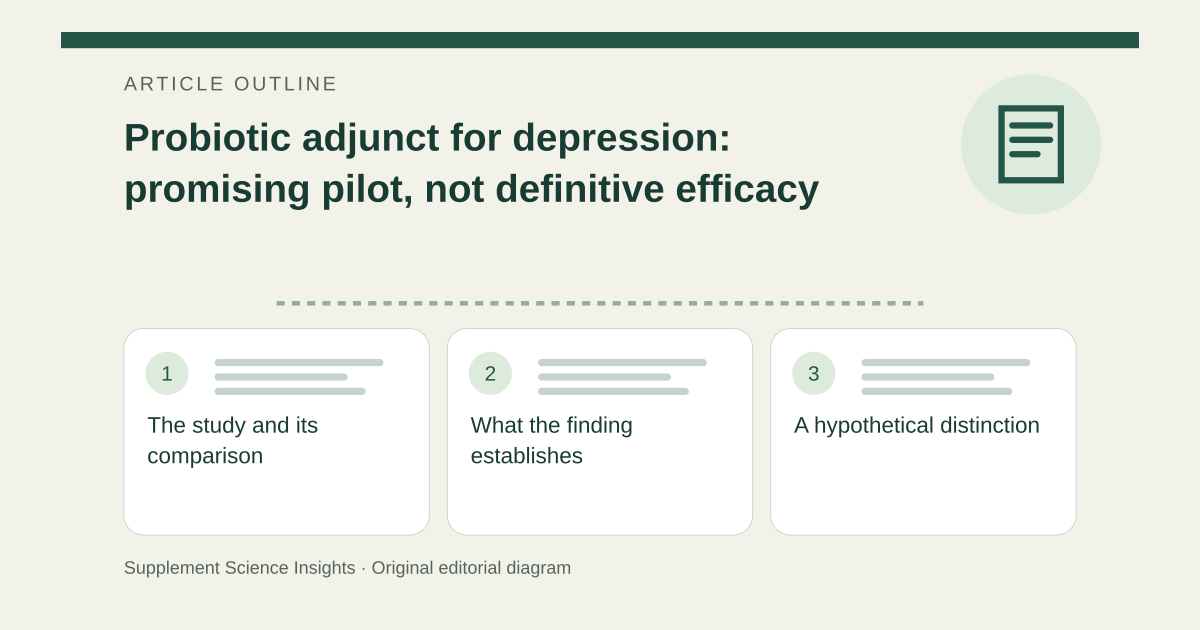
The study and its comparison
Forty-nine adults with major depression and incomplete antidepressant response entered an eight-week double-blind trial. The intervention was a multistrain probiotic or placebo added to ongoing medication. [1]
The investigators reported favorable symptom signals and acceptability. The pilot was intended to inform a larger definitive trial, so estimates from this small sample should not be treated as a settled treatment effect. [1]
What the finding establishes
It did not compare probiotics alone with antidepressants. Funding included an MRC studentship with ADM Protexin as industry partner and charitable support. ADM supplied products and contributed intervention-specific input; authors disclosed additional industry relationships. These disclosures and the preliminary design both belong in interpretation. [1]
A hypothetical distinction
Imagine an add-on intervention is tested while treatment continues. That design cannot show that the add-on can replace treatment.
| Detail | Interpretation |
|---|---|
| Measured outcome | Keep the endpoint specific |
| Study preparation | Not every retail product |
| Remaining uncertainty | Not resolved by a mechanism |
Sources for this article
- Acceptability, Tolerability, and Estimates of Putative Treatment Effects of Probiotics as Adjunctive Treatment in Patients With Depression: A Randomized Clinical Trial - PMC
Source consulted: 2026-09-19. This is a reference resource, not a claim that we conducted the studies or tested a product.