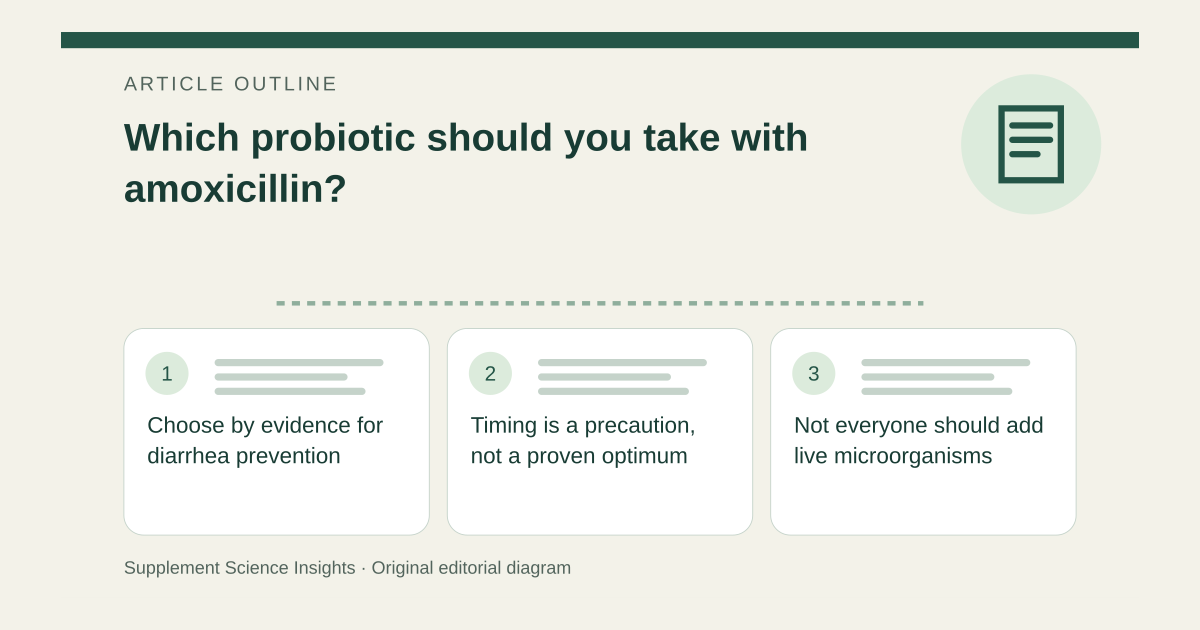
Choose by evidence for diarrhea prevention
ODS identifies evidence for particular preparations, including Lactobacillus rhamnosus GG and Saccharomyces boulardii, for antibiotic-associated diarrhea in relevant populations. This does not mean every product containing those species, every dose or every patient receives the same benefit. Match the strain and preparation to appropriate clinical evidence. [1]
Timing is a precaution, not a proven optimum
ISAPP notes that effective study regimens usually started before or within one to two days of antibiotics. For bacterial probiotics, a two-hour gap may be prudent to limit inactivation, but comparative scheduling studies are lacking. Yeast probiotics are not inactivated by antibacterial antibiotics. Keep the prescribed amoxicillin schedule the priority. [2]
Not everyone should add live microorganisms
Serious illness, impaired immunity and an intravenous catheter require particular caution because rare invasive infections have occurred. Product quality, age and baseline diarrhea risk matter. Benefits should be judged by symptoms and clinical outcomes, rather than a promise to replace all lost bacteria. [1][2]
A practical selection example
Imagine a healthy adult comparing two products during an amoxicillin course. The useful comparison is the exact strain, studied dose and reason for use, not which bottle lists more organisms. A pharmacist can help determine whether either is appropriate and fit it around the prescription. [1][2]
| Check | Why it matters |
|---|---|
| Exact strain | Benefits are not interchangeable |
| Relevant evidence | Diarrhea prevention is a specific outcome |
| Bacterial or yeast | Timing considerations differ |
| Individual risks | Some people need specialist review |
Sources for this article
- Probiotics - Health Professional Fact Sheet
Source consulted: 2026-09-21. This is a reference resource, not a claim that we conducted the studies or tested a product. - Probiotic use alongside antibiotics: A guide to clinical FAQs
Source consulted: 2026-09-21. This is a reference resource, not a claim that we conducted the studies or tested a product.