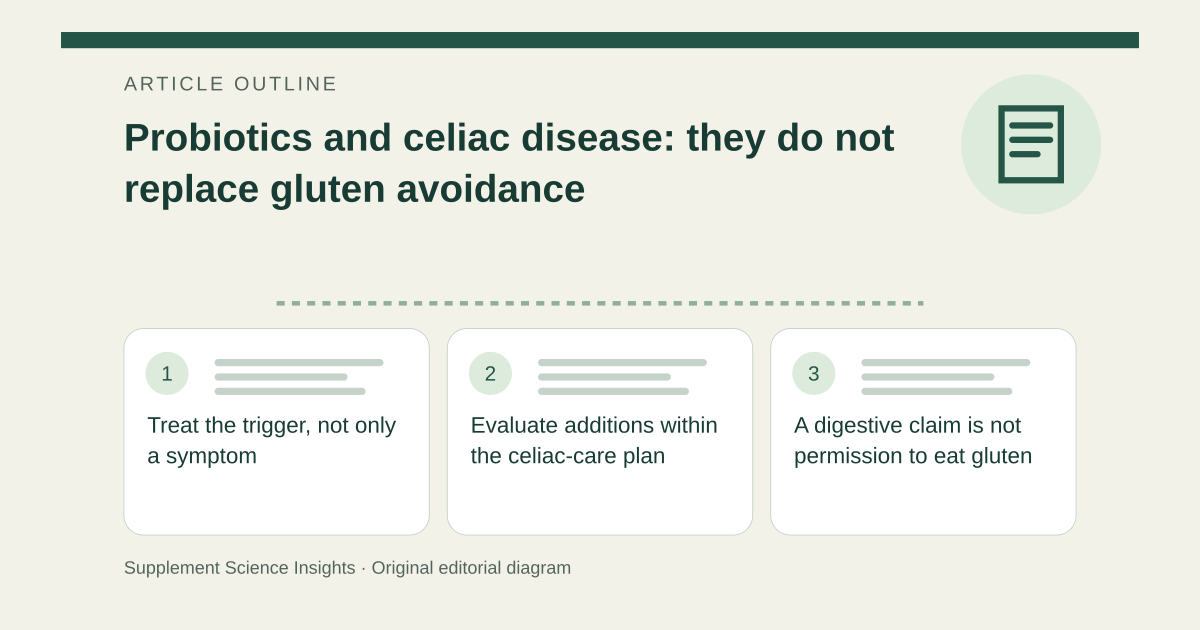
Treat the trigger, not only a symptom
NIDDK explains that gluten triggers an abnormal immune response in celiac disease and that a gluten-free diet can allow intestinal healing and prevent further damage. A registered dietitian can help implement that treatment. [1]
Feeling less bloated after a product is not proof that gluten exposure has become harmless. Symptom relief and prevention of the disease process are different outcomes. [1]
Evaluate additions within the celiac-care plan
The NIDDK guidance advises checking supplements and other products for possible gluten-containing ingredients. Review the actual formulation rather than relying on a general probiotic or digestive-health category. [1]
This source does not establish a best probiotic brand for celiac disease. An adjunctive product would need evidence for its particular purpose and should not displace the gluten-free diet or follow-up care. [1]
A digestive claim is not permission to eat gluten
Imagine a capsule is advertised as restoring gut balance. That does not show that a person with celiac disease can safely resume wheat-containing foods. The relevant outcome would be disease protection, not the slogan.
| Detail | Interpretation |
|---|---|
| Gluten avoidance | Core dietary treatment |
| Symptom change | Not proof of intestinal protection |
| Supplement formula | Check actual ingredients |
Sources for this article
- Treatment for Celiac Disease - NIDDK
Source consulted: 2026-09-17. This is a reference resource, not a claim that we conducted the studies or tested a product.