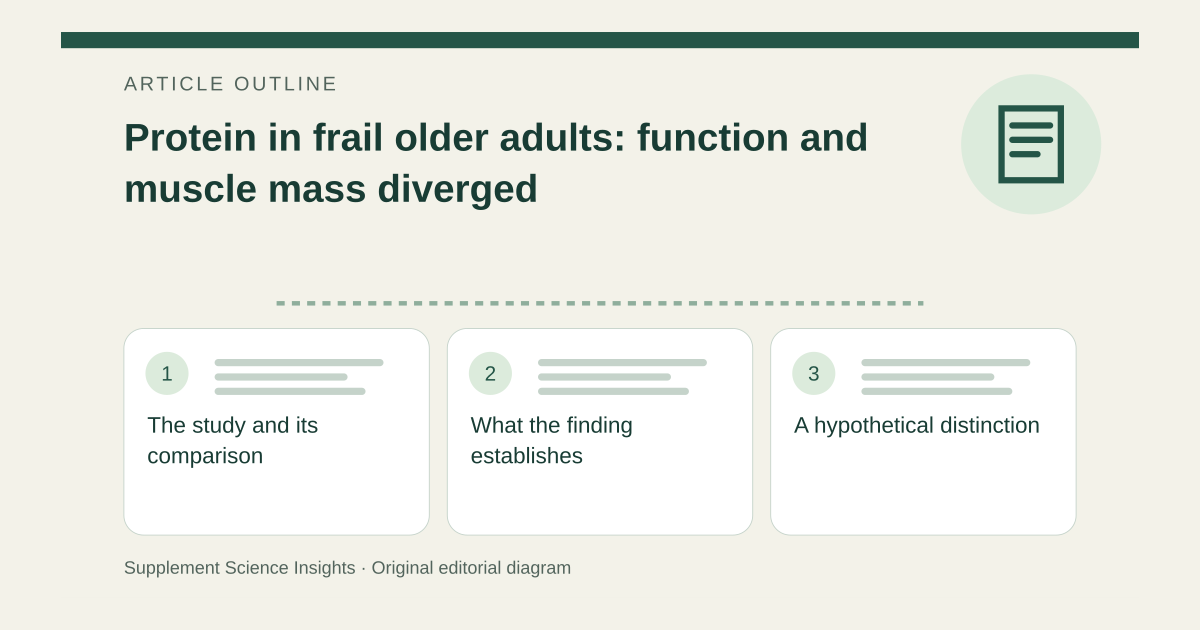
The study and its comparison
Sixty-five frail older adults received protein or placebo for 24 weeks. The protein group took 15 grams at breakfast and another 15 grams at lunch. [1]
The physical-performance score showed a significant treatment interaction, but muscle mass and muscle-fiber measurements did not increase. The leg-strength interaction had a P value of 0.059 and was described as a trend. [1]
What the finding establishes
Better function does not automatically imply measured hypertrophy. Conversely, a null mass result does not erase the separate performance finding. This selected population and regimen cannot settle supplementation for all older adults. Funding and conflicts were not established from the retrieved abstract. [1]
A hypothetical distinction
Imagine a walking-and-standing score improves while a muscle scan stays unchanged. Report both rather than substituting one for the other.
| Detail | Interpretation |
|---|---|
| Measured outcome | Keep the endpoint specific |
| Study preparation | Not every retail product |
| Remaining uncertainty | Not resolved by a mechanism |
Sources for this article
- Protein supplementation improves physical performance in frail elderly people: a randomized, double-blind, placebo-controlled trial.
Source consulted: 2026-09-19. This is a reference resource, not a claim that we conducted the studies or tested a product.