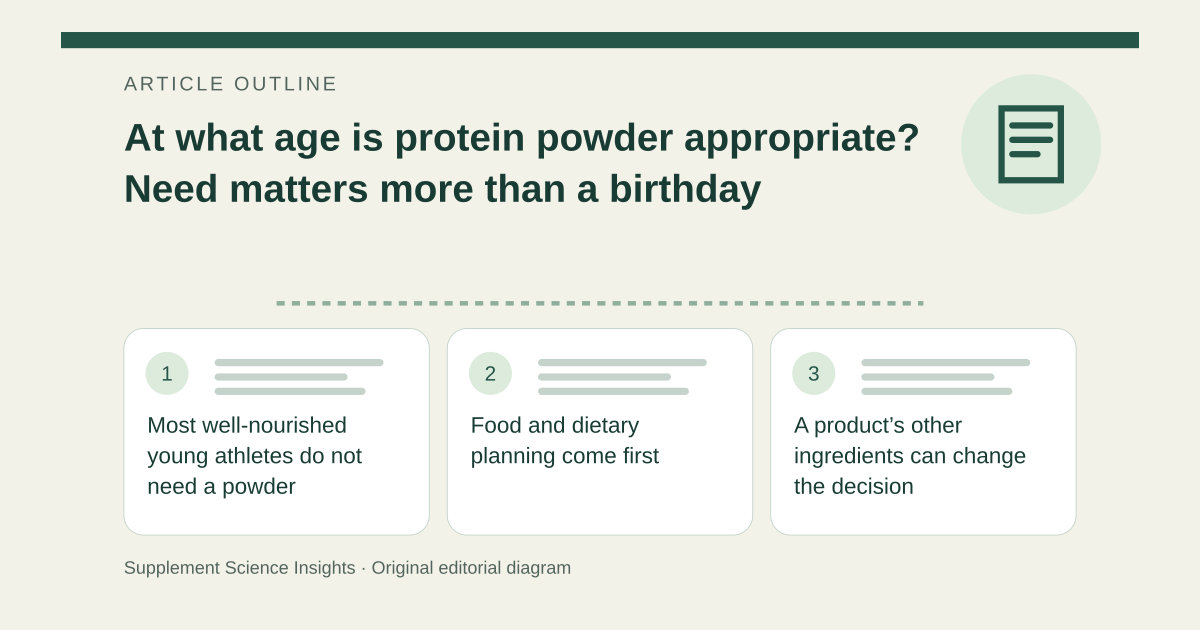
Most well-nourished young athletes do not need a powder
AAP guidance says most young athletes eating a balanced diet do not need or benefit from protein supplements. That is a statement about nutritional need, not a claim that every child has identical intake or that medically indicated nutrition support is never useful. [1]
Food and dietary planning come first
Protein is available through ordinary foods, and different dietary patterns can meet needs. AAP suggests dietitian-supported meal planning when adequate intake is uncertain. A powder should address a defined gap rather than be added simply because an athlete becomes interested in strength training. [1][2]
A product’s other ingredients can change the decision
A plain protein product and a pre-workout blend are not interchangeable. Review caffeine, botanicals, vitamins, allergens and serving information. An adult serving size is not automatically a pediatric plan, and a marketing age range is not independent proof of benefit for a particular child. [3][1]
Growth or feeding concerns need a specific assessment
Discuss poor intake, dietary restriction or concerns about growth with the pediatrician or dietitian. The appropriate response may involve food planning or a particular nutrition product. It cannot be selected from the word protein alone. [1]
Avoid treating puberty as a supplement deficiency
Imagine a teenager compares their size with an older teammate and wants a larger powder serving. AAP notes that development itself affects strength and sports performance. Nutrition and training should support the individual’s development rather than chase another person’s supplement routine. [1][2]
| Question | Purpose |
|---|---|
| Is intake actually inadequate? | Identify a real gap |
| What else is in the product? | Assess the complete exposure |
| Any growth or medical concern? | Seek individualized pediatric guidance |
Sources for this article
- Performance-Enhancing Sports Supplements: Information for Parents - HealthyChildren.org
Source consulted: 2026-09-21. This is a reference resource, not a claim that we conducted the studies or tested a product. - Dietary Supplements for Exercise and Athletic Performance - Health Professional Fact Sheet
Source consulted: 2026-09-21. This is a reference resource, not a claim that we conducted the studies or tested a product. - Dietary Supplements: What You Need to Know
Source consulted: 2026-09-21. This is a reference resource, not a claim that we conducted the studies or tested a product.