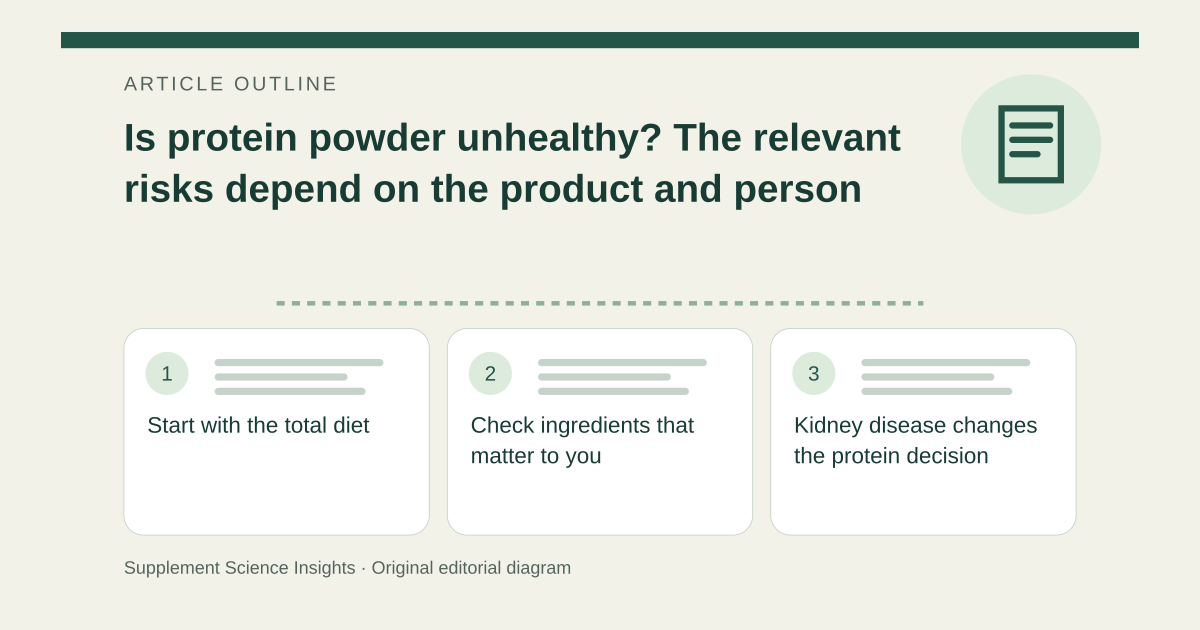
Start with the total diet
ODS describes protein as supporting training adaptation and emphasizes adequate overall intake. A powder supplies part of that intake; it does not make an otherwise unbalanced diet complete. Adding servings after food already meets the need is not automatically an improvement. [1]
Check ingredients that matter to you
Milk-derived whey is unsuitable for someone with a milk allergy, and plant-based blends can contain other allergens. Added ingredients and the mixing liquid change the prepared serving. A long chemical name is not by itself evidence of toxicity, while a familiar food source does not remove an individual allergy risk. Read the complete ingredient and allergen declarations. [2][3]
Kidney disease changes the protein decision
NIDDK advises individualized protein balance in chronic kidney disease: excessive waste burden and inadequate nutrition both matter. A generic bodybuilding target should not replace renal advice. This is different from claiming that an ordinary protein serving damages every healthy kidney. [4]
Contamination requires evidence about the actual product
A clean or natural slogan cannot establish a contaminant concentration. Check independently verifiable testing and what it covers; NSF describes defined content and contaminant checks. No exact-brand heavy-metal ranking or zero-risk guarantee is established here. Athletes should also check the specific banned-substance certification scope. [5][1]
Avoid an unsupported toxic-ingredient blacklist
Imagine a powder causes symptoms after a formula change. Keep its label and serving details for review; consider allergy, tolerance and other exposures rather than identifying the culprit from a social-media list. Choose a product only when its dietary role and suitability are clear, and obtain medical advice for concerning reactions. [3][1]
| Question | Why it matters |
|---|---|
| Does food already meet the need? | Avoid unnecessary added intake |
| Any relevant allergy or kidney condition? | Personal suitability |
| What testing is verified? | Defined manufacturing assurance |
Sources for this article
- Dietary Supplements for Exercise and Athletic Performance - Health Professional Fact Sheet
Source consulted: 2026-09-21. This is a reference resource, not a claim that we conducted the studies or tested a product. - How to Understand and Use the Nutrition Facts Label | FDA
Source consulted: 2026-09-21. This is a reference resource, not a claim that we conducted the studies or tested a product. - Dietary Supplements: What You Need to Know
Source consulted: 2026-09-21. This is a reference resource, not a claim that we conducted the studies or tested a product. - Healthy Eating for Adults with Chronic Kidney Disease - NIDDK
Source consulted: 2026-09-21. This is a reference resource, not a claim that we conducted the studies or tested a product. - Dietary Supplement and Vitamin Certification | NSF
Source consulted: 2026-09-21. This is a reference resource, not a claim that we conducted the studies or tested a product.