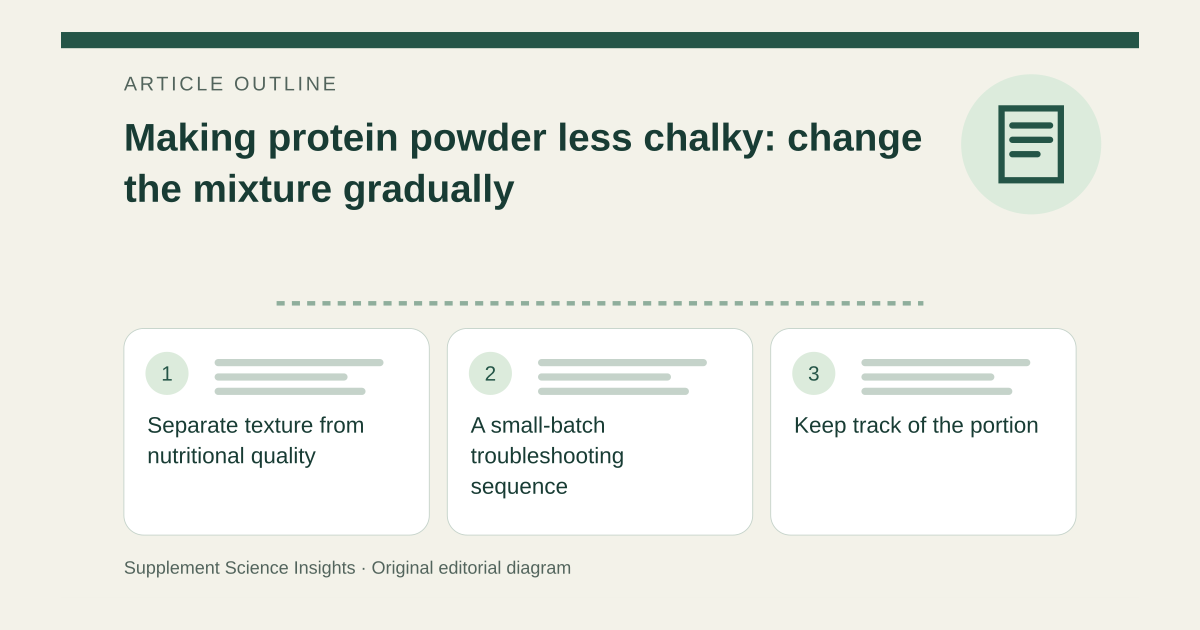
Separate texture from nutritional quality
Whey and casein are milk proteins that can be dried into powders. Their nutritional identity does not establish how smooth a finished flavored product will feel. A chalky texture alone does not measure protein quality, and an unusually changed smell or appearance should not be disguised with flavorings. [1]
A small-batch troubleshooting sequence
Start with the package mixing directions. Put the liquid in first, add powder gradually and mix thoroughly with equipment suitable for that drink. If the mixture remains pasty, add a little more liquid. If the flavor is too concentrated, reduce the amount of powder in the next small trial. A fruit blend or yogurt may change the texture, but adds its own ingredients and does not guarantee that gritty particles disappear. [1]
Keep track of the portion
Imagine one serving supplies 24 g protein. Testing half a serving supplies 12 g from powder, before the mixer. That is a recipe adjustment, not evidence that half a serving meets your needs. Compare the drink with the rest of your diet; adequate dietary protein, rather than a particular shake texture, supports training and recovery. [2]
| Hypothetical trial | What changes |
|---|---|
| Half a 24 g protein serving | 12 g protein from powder |
| More liquid with the full serving | Less concentrated drink; same powder protein |
| Different mixer | Texture and total nutrients may change |
Sources for this article
- Whey vs. Casein Protein: Difference Explained | U.S. Dairy
Source consulted: 2026-09-20. This is a reference resource, not a claim that we conducted the studies or tested a product. - Dietary Supplements for Exercise and Athletic Performance - Health Professional Fact Sheet
Source consulted: 2026-09-20. This is a reference resource, not a claim that we conducted the studies or tested a product.