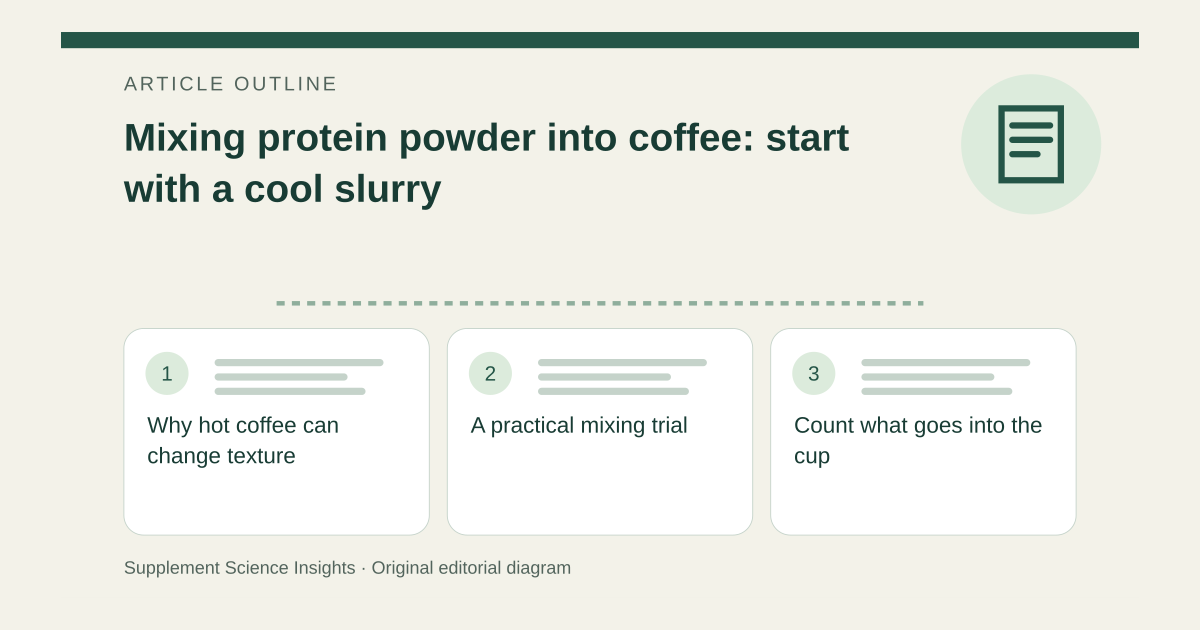
Why hot coffee can change texture
Heat and pH can alter a protein’s folded structure. This denaturation does not itself remove the primary amino-acid sequence. It can help explain a texture change, but does not supply a universal temperature at which every commercial powder will clump or lose nutritional value. [1]
A practical mixing trial
For a small first attempt, whisk the intended powder portion into cool water or milk until evenly dispersed. Let freshly brewed coffee cool somewhat, then stir it in gradually. Follow any product-specific preparation instructions. Use an open cup and suitable utensils; do not shake hot coffee in a sealed shaker. This is an untested kitchen suggestion, not a promise that every plant or dairy powder stays smooth. [1]
Count what goes into the cup
Imagine half a powder serving supplies 10 g protein and you use water for the slurry. The powder contributes 10 g whether the final coffee is large or small. Milk adds its own protein and energy. Decide whether that addition fits the day’s food intake; coffee does not make a protein supplement necessary. [2]
| Hypothetical preparation | Interpretation |
|---|---|
| Half of a 20 g protein serving | 10 g from powder |
| Water slurry | No extra protein from the water |
| Milk slurry | Add the milk contribution separately |
Sources for this article
- 3.4 Proteins - Biology 2e | OpenStax
Source consulted: 2026-09-20. This is a reference resource, not a claim that we conducted the studies or tested a product. - Dietary Supplements for Exercise and Athletic Performance - Health Professional Fact Sheet
Source consulted: 2026-09-20. This is a reference resource, not a claim that we conducted the studies or tested a product.