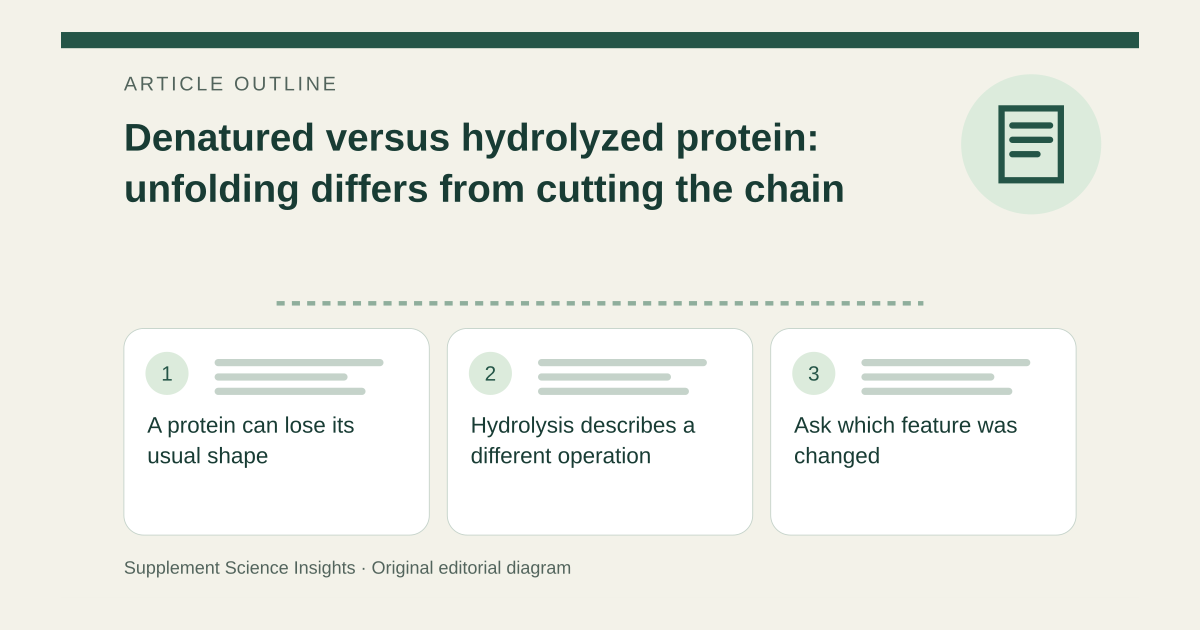
A protein can lose its usual shape
Heat, altered pH or chemicals can disrupt the interactions maintaining a protein’s folded structure. This is denaturation. The primary amino-acid sequence can remain intact even though the protein no longer performs its original biological function. [1]
Some proteins can regain their fold when conditions change back; others do not readily do so. An egg white becoming firm during heating is a familiar example of a major structural change, but not a demonstration that all its peptide bonds have been removed. [1]
Hydrolysis describes a different operation
Hydrolysis cleaves peptide bonds, producing shorter chains or free amino acids depending on the extent of the process. A denatured protein can still be a long chain, while a hydrolyzed preparation contains material changed at the backbone level. [1]
Undenatured on a collagen product describes a claimed structural property, not automatic superiority for every intended use. A result with an undenatured preparation should not be assigned to a hydrolysate without checking what the clinical study actually tested. [1]
Ask which feature was changed
Imagine one process unfolds a chain and another cuts it into fragments. Both alter the starting material, but in different ways. A comparison should specify whether the measured change concerns shape, chain length or a clinical outcome.
| Feature | Interpretation |
|---|---|
| Denaturation | Change in organized shape |
| Hydrolysis | Cleavage of peptide bonds |
| Clinical benefit | Separate evidence question |
Sources for this article
- OpenStax Biology 2e: Proteins
Source consulted: 2026-09-17. This is a reference resource, not a claim that we conducted the studies or tested a product.