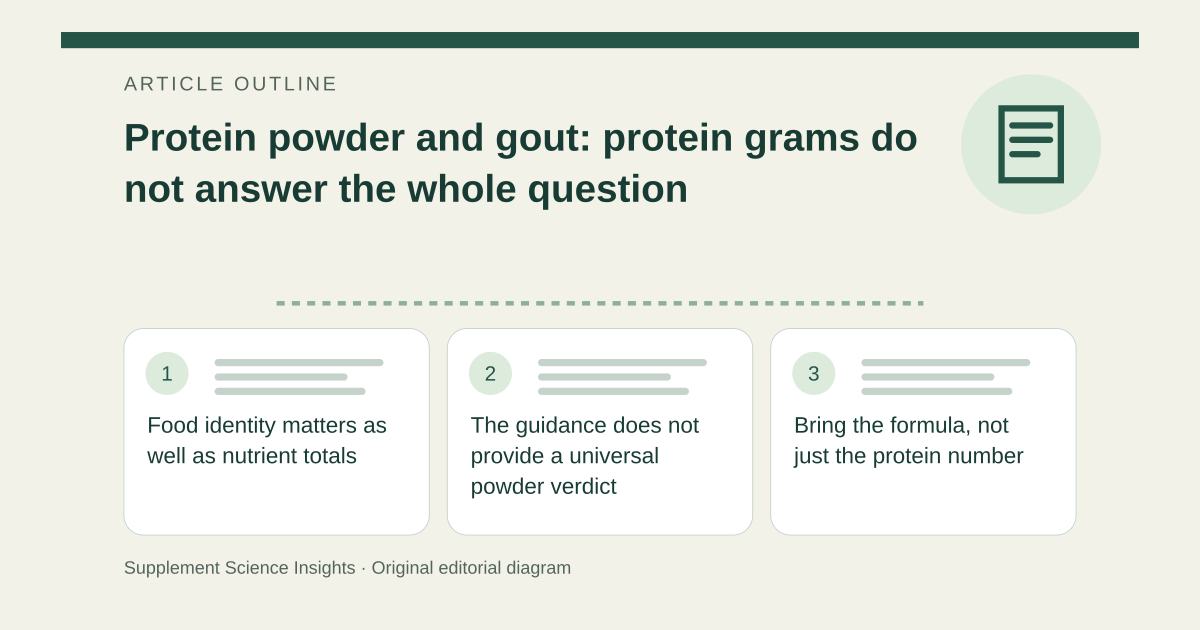
Food identity matters as well as nutrient totals
NIAMS advises limiting particular purine-rich foods, including red and organ meats and some seafood. Its discussion of a DASH pattern also includes low-fat or fat-free dairy products. [1]
These distinctions show why all protein-containing foods should not be treated as one exposure. The exact powder and its full formulation need consideration within the overall diet. [1]
The guidance does not provide a universal powder verdict
The cited source does not test every whey, plant or blended powder. It cannot support a claim that all powders cause gout, or that a particular powder is automatically protective. [1]
For frequent flares or tophi, NIAMS states that lifestyle changes alone are insufficient and urate-lowering medicines are central to management. A supplement choice should not replace that care. [1]
Bring the formula, not just the protein number
Imagine two products each list 20 grams of protein. That shared number does not describe their ingredients or establish the same fit within a gout-management plan.
| Detail | Interpretation |
|---|---|
| Protein grams | Incomplete exposure description |
| Food and formula | Relevant dietary context |
| Frequent gout flares | Need appropriate medical management |
Sources for this article
- Gout: Diagnosis, Treatment, and Steps to Take
Source consulted: 2026-09-18. This is a reference resource, not a claim that we conducted the studies or tested a product.