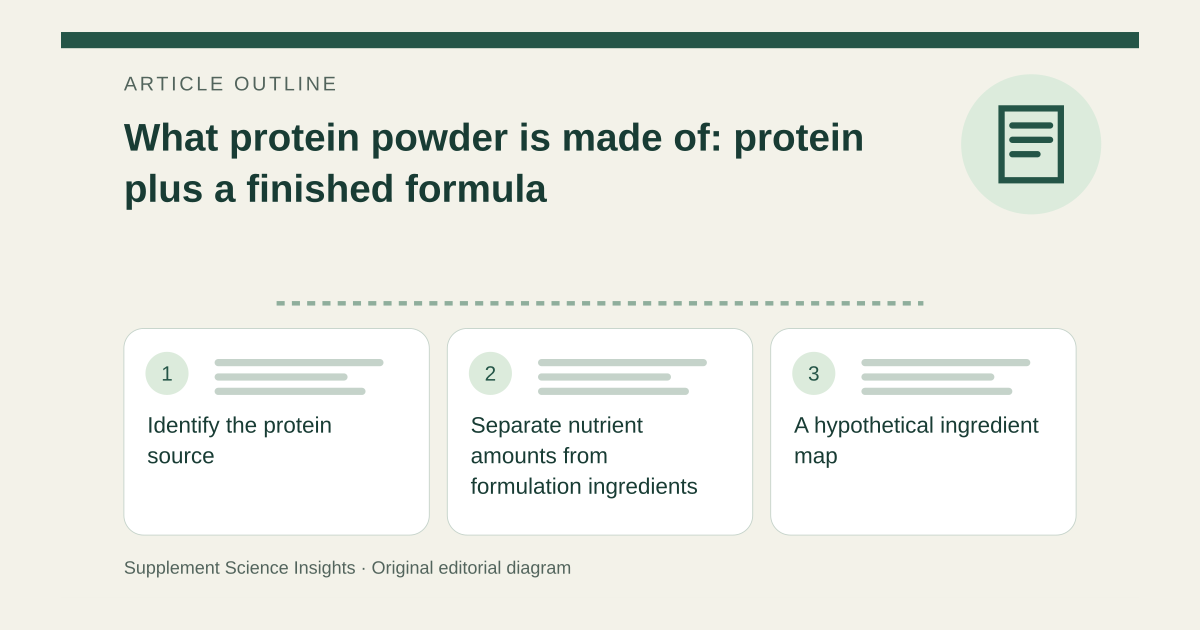
Identify the protein source
Whey and casein are milk proteins; other formulations use plant-derived protein or a blend. The protein ingredient is not necessarily the entire scoop. ODS notes that performance supplements often combine multiple ingredients and that evidence for one ingredient does not automatically establish the effect of the whole mixture. [1][2]
Separate nutrient amounts from formulation ingredients
The nutrient panel describes quantities such as protein and carbohydrate per serving. The ingredient list identifies what was used to make the mixture. A flavoring or mixing aid is not automatically another protein source, and a long list does not by itself quantify protein quality. Inspect the actual label rather than assuming every powder follows one recipe. [3][2]
A hypothetical ingredient map
Imagine a powder lists whey protein, cocoa, a sweetener and a mixing aid. The whey identifies the main protein source; the other entries describe parts of the finished recipe. A30 g serving declaring22 g protein is still30 g of mixture, not30 g of pure protein. This example is illustrative and does not identify a brand. [3][1]
| Hypothetical ingredient | Role in the example |
|---|---|
| Whey protein | Milk-derived protein source |
| Cocoa | Flavor component |
| Other declared ingredients | Read their actual identities and amounts where given |
Sources for this article
- Whey vs. Casein Protein: Difference Explained | U.S. Dairy
Source consulted: 2026-09-20. This is a reference resource, not a claim that we conducted the studies or tested a product. - Dietary Supplements for Exercise and Athletic Performance - Health Professional Fact Sheet
Source consulted: 2026-09-20. This is a reference resource, not a claim that we conducted the studies or tested a product. - How to Understand and Use the Nutrition Facts Label | FDA
Source consulted: 2026-09-20. This is a reference resource, not a claim that we conducted the studies or tested a product.