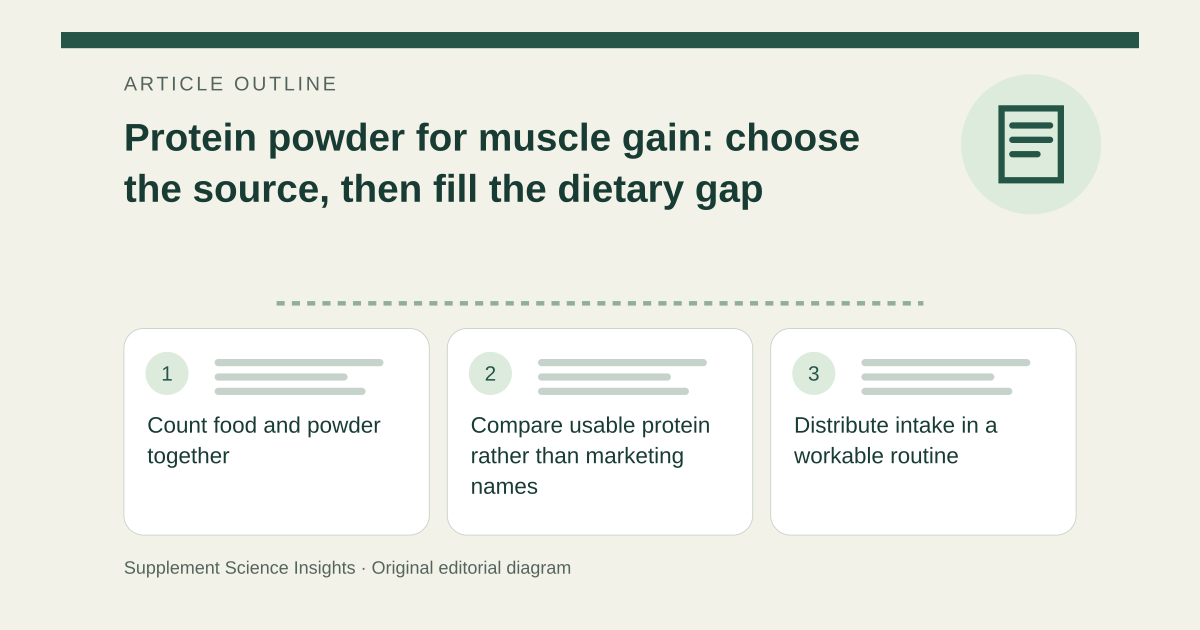
Count food and powder together
ODS summarizes athlete protein guidance of about 1.2 to 2.0 grams per kilogram of body weight per day. This is a total-intake range, not an instruction to consume that amount as powder, and medical circumstances can require an individualized plan. [1]
Compare usable protein rather than marketing names
Whey and suitable plant sources or combinations can contribute to essential amino-acid intake. Check dietary preferences, allergy needs and the actual protein per serving. More expensive, natural or bodybuilding on the label does not establish superior muscle growth. [1][2]
Distribute intake in a workable routine
ODS describes sports guidance that spreads protein servings through the day and includes recovery after exercise. A convenient shake can serve that role, but it does not replace sufficient overall nutrition or the training stimulus. Avoid treating one exact minute as the decisive factor. [1]
Verify the finished product
Independent sports certification can provide assurance about declared content and specified banned substances. Check the exact formula in the certifier directory and review additional ingredients. A protein benefit does not establish that every added herb or stimulant is useful. [1]
Choosing protein powder after age 50
Turning 50 does not identify a particular best brand or create a requirement to use powder. Start with the protein supplied by meals, your training goal and any individual nutrition plan. Whey can be a convenient choice when milk fits your diet; a suitable plant blend can serve someone avoiding dairy. Check useful protein per serving, tolerability and testing rather than an age-focused marketing label. [3][4]
Evidence from frail older adults should not be presented as proof of the same benefit in every healthy person over 50. NIA encourages varied, nutrient-dense protein foods as people age. A powder is a way to fill an identified dietary gap, not a replacement for that food pattern or evidence that the largest scoop is best. [3][4]
Calculate the gap before the scoops
Imagine an agreed daily target is 120 grams and meals supply 95 grams. A serving providing 25 grams would fill that arithmetic gap. The numbers illustrate a plan, not a personal prescription; scoop weight is not always equal to grams of protein. [2][1]
| Item | Grams of protein |
|---|---|
| Agreed total target | 120 |
| Food intake | 95 |
| Remaining gap | 25 |
Sources for this article
- Dietary Supplements for Exercise and Athletic Performance - Health Professional Fact Sheet
Source consulted: 2026-09-21. This is a reference resource, not a claim that we conducted the studies or tested a product. - How to Understand and Use the Nutrition Facts Label | FDA
Source consulted: 2026-09-21. This is a reference resource, not a claim that we conducted the studies or tested a product. - National Institute on Aging: Healthy Eating As You Age, protein foods
Source consulted: 2026-09-25. This is a reference resource, not a claim that we conducted the studies or tested a product. - NIH ODS: exercise and athletic performance, protein and creatine
Source consulted: 2026-09-25. This is a reference resource, not a claim that we conducted the studies or tested a product.