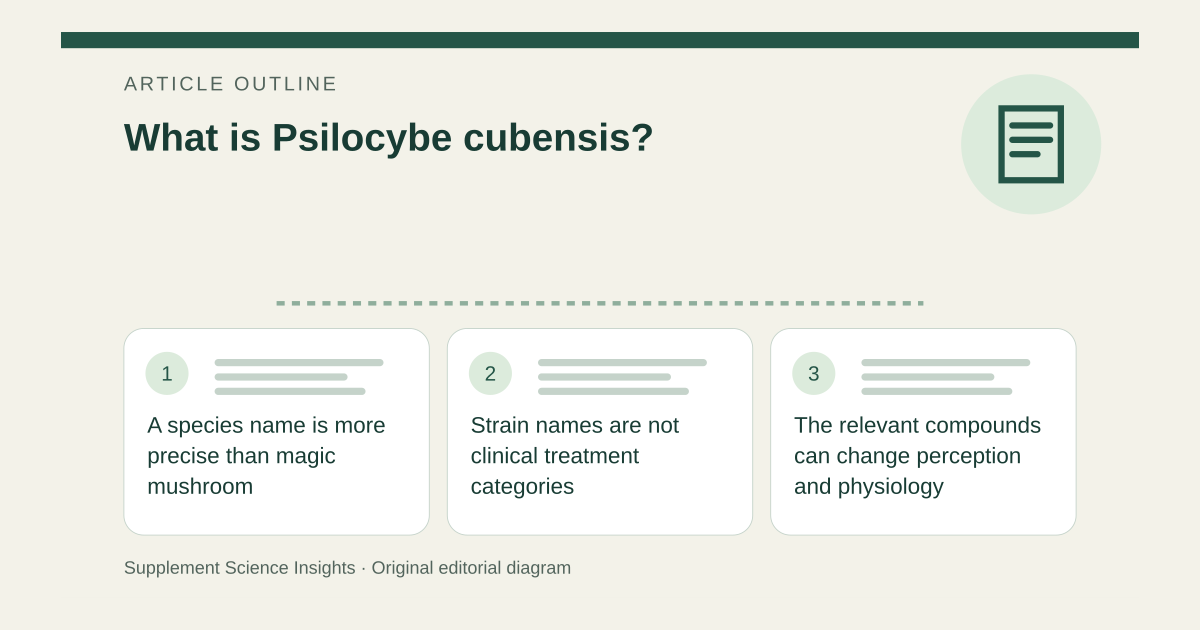
A species name is more precise than magic mushroom
Magic mushroom is an informal term covering multiple psychoactive fungi. P. cubensis identifies one species within the genus Psilocybe. The scientific name is useful for discussing research, but it does not authenticate a purchased or foraged sample. [1]
Strain names are not clinical treatment categories
Many named variants circulate in cultivation communities. A scientific review emphasizes incomplete formal documentation and variable evidence behind strain descriptions. Names such as Golden Teacher or Penis Envy do not establish predictable effects or medical indications. [1]
The relevant compounds can change perception and physiology
Psilocybin is converted to psilocin in the body. Effects can include altered perception and emotion, nausea, anxiety and cardiovascular changes. These are drug effects, not nutritional benefits shared by all mushrooms. [2]
Do not identify a specimen from the name on a bag
Imagine dried pieces are labeled P. cubensis. That label does not rule out misidentification or contamination. Unknown exposure with concerning symptoms warrants poison-control or emergency advice rather than a photo-based safety decision. [3]
| Label element | What it means |
|---|---|
| Psilocybe cubensis | Species claim |
| Named strain | Not a standardized clinical formulation |
| Mushroom weight | Not verified active content |
| Natural origin | Not a safety guarantee |
Sources for this article
- Exploring Psilocybe cubensis Strains: Cultivation Techniques, Psychoactive Compounds, Genetics and Research Gaps - PMC
Source consulted: 2026-09-21. This is a reference resource, not a claim that we conducted the studies or tested a product. - Psilocybin for Mental Health and Addiction: What You Need To Know | NCCIH
Source consulted: 2026-09-21. This is a reference resource, not a claim that we conducted the studies or tested a product. - Magic Mushrooms (Psilocybin) Safety | California Poison Control System
Source consulted: 2026-09-21. This is a reference resource, not a claim that we conducted the studies or tested a product.